Sunrise
About
What It Is
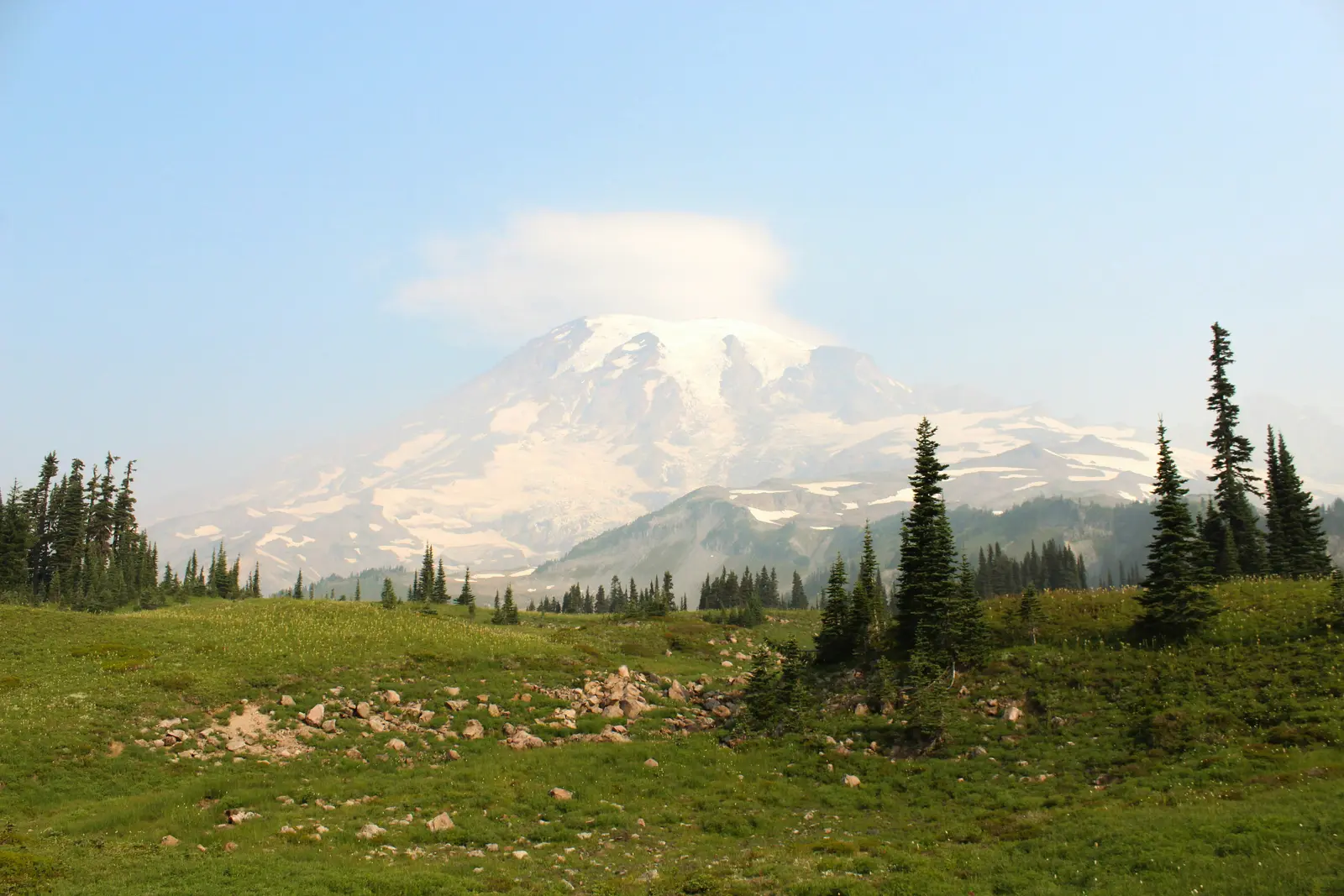
Sunrise is the highest point accessible by vehicle within Mount Rainier National Park, sitting at an elevation of 6,400 feet on the park's eastern side amid the subalpine meadows collectively known as Yakima Park [1]. It is the park's second most visited location, offering a visitor center with exhibits on geology and natural and cultural history, as well as a day lodge [1][2]. The meadows here have been used for thousands of years by indigenous peoples, including the Yakama, for hunting, gathering, and their cultural significance [1]. The Sunrise Visitor Center and Sunrise Day Lodge are part of a National Historic Landmark District [1].
Activities & Experiences
Visitors can explore an extensive network of hiking trails ranging from short and easy walks to longer, more demanding routes [2]. Popular options include the Sunrise Rim Trail and Silver Forest Trail, both of which provide views along the full length of Emmons Glacier from Mount Rainier's summit down to the White River Valley [2]. Other trails lead to Sourdough Ridge, Frozen Lake, the Mount Fremont fire tower, and Shadow Lake, where mountain goats are frequently spotted [2]. Sunrise Point offers nearly 360-degree views of Mount Rainier, surrounding valleys, and other Cascade volcanoes including Mount Adams [1]. Mounted telescopes at the visitor center allow close-up views of the glaciers, and ranger-led interpretive programs and guided walks are available [2]. A geology audio tour, also accessible through the NPS App, accompanies the drive along Sunrise Road and includes a short walk to Emmons Glacier overlooks [1].
Practical Access
Sunrise is located 60 miles northeast of the Nisqually Entrance and 14 miles northwest of the Sunrise/White River turnoff on State Route 410 [1]. The Sunrise Road, a 16-mile paved road from SR 410, typically opens in late June or early July and closes in late September to early October [1][2]. The Sunrise Visitor Center is open from early July to early September, and the Sunrise Day Lodge, which offers food service and a gift shop, is open from early July to late September [1]. There is no overnight lodging at Sunrise [1][2]. The White River Campground, which includes a picnic area, is located 12 miles from the Sunrise Visitor Center [1]. Visitors should check road status before setting out [1].
Restrictions
Overnight camping in vehicles is not permitted in the Sunrise parking area or at pullouts along the road; vehicle camping is allowed only in designated campgrounds [1]. Dogs are not allowed on trails [1]. Visitors must stay on trails to protect the delicate subalpine meadows [1].
What Makes It Distinctive
Sunrise is the highest vehicle-accessible point in Mount Rainier National Park, a distinction that places visitors directly within the subalpine zone and provides unusually close views of Emmons Glacier and the surrounding Cascade peaks [1][2]. Its location in the park's drier northeastern corner, in the rain shadow of Mount Rainier, means it tends to receive morning light earlier than other areas of the park [2]. Compared to the more heavily visited Paradise area, Sunrise offers a less crowded trail network while delivering comparable scenic quality, including wildflower meadows, glacier views, and wildlife such as mountain goats and elk [2].
Sources
- Sunrise - Mount Rainier National Park (U.S. National Park Service)
- Sunrise at Mt. Rainier National Park - Visit Rainier
- Season: July–September
- Typical duration: 4h
Things to do
- geology audio self-guided tour
- glacier viewing with telescopes
- hiking — multiple trails
- mountain viewing
- nature observation
- picnicking
- ranger-led interpretive programs
- scenic driving
- wildflower viewing
- wildlife watching
Amenities
- gift shop on-site
- no overnight lodging
- picnic area on-site
- sunrise day lodge food service
- sunrise visitor center
Best time to visit
- road open season
- wildflowers peak midsummer
Features
- columnar andesite lava formation
- highest vehicle-accessible point
- national historic landmark district
- nearly 360° panoramic views
- rain-shadow microclimate
- scenic viewpoints
- subalpine wildflower meadows
- sunrise/sunset viewing
Nearby
- tipsoo lake at chinook pass
- white river campground
Good to know
- check road status before visiting
- distance from nisqually entrance
- road length to sunrise