Mount Rainier
About
What It Is
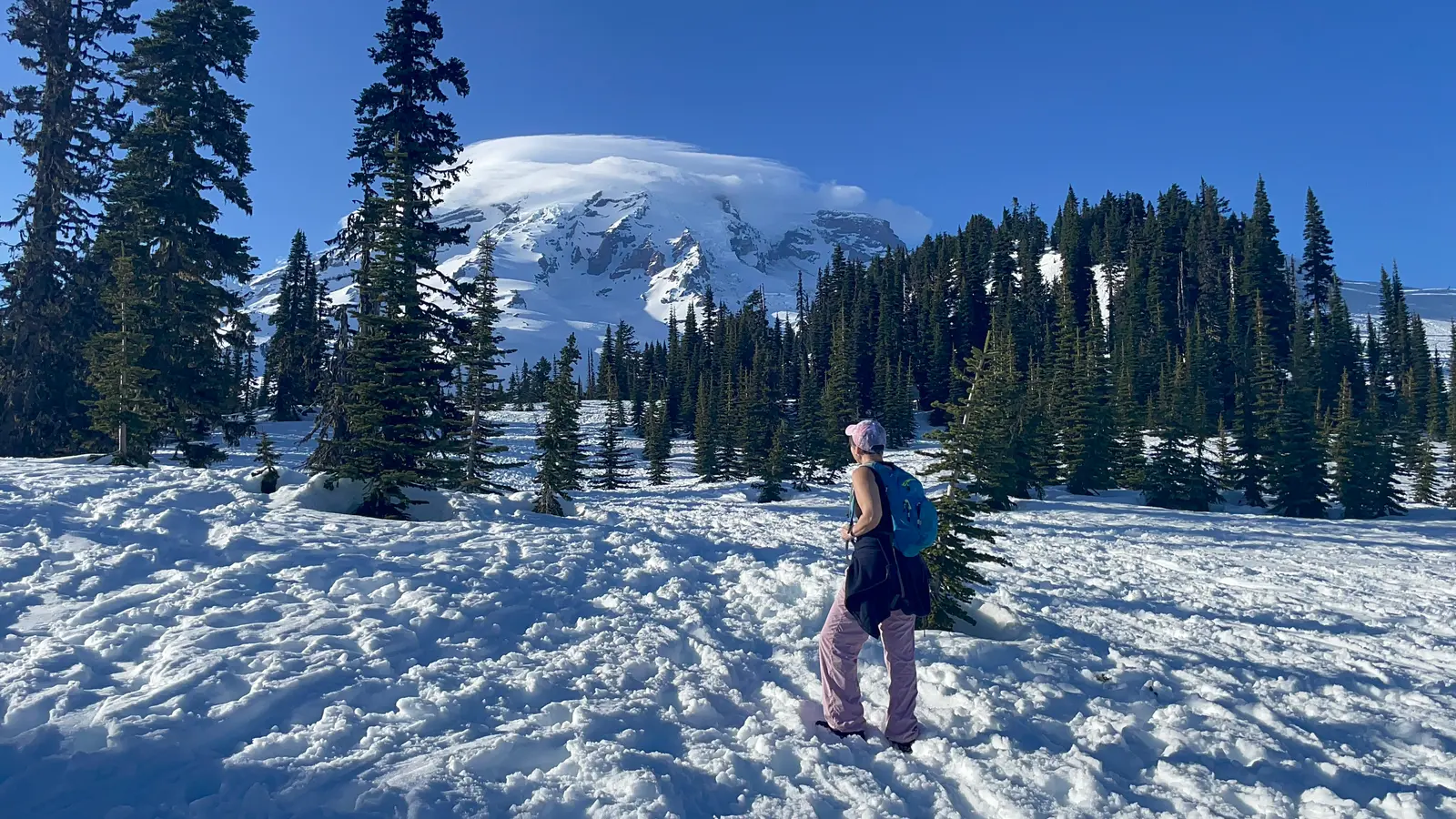
Mount Rainier is an active stratovolcano rising to 14,410 feet above sea level, located within Mount Rainier National Park in Washington State, roughly 54 miles southeast of Seattle [3]. Established on March 2, 1899, the park was the fifth national park in the United States and covers approximately 236,381 acres, of which 97 percent is designated wilderness [2]. The park exists to protect the volcano and its surrounding natural systems, including glaciers, old-growth forests, subalpine meadows, rivers, and wetlands, while providing opportunities for public recreation and wilderness experience [2].
Mount Rainier holds the distinction of being the highest peak in the Cascade Range and the most glaciated summit in the contiguous United States, with more than 25 glaciers descending its flanks and glaciers and snowfields covering roughly 35 square miles in total [2][3]. The park was designated a National Historic Landmark in 1997, recognized in part for its examples of National Park Service rustic-style architecture from the 1920s and 1930s [2].
Activities & Experiences
Visitors can hike an extensive trail network, including the Wonderland Trail, which encircles the entire mountain and passes through subalpine meadows and old-growth forest [1][2]. Mountaineering is a major draw, with approximately 10,000 summit attempts made each year and roughly half reaching the top [2]. Wildlife viewing is common throughout the park, with species including black bear, elk, mountain goat, Columbian black-tailed deer, and a wide range of birds and amphibians present across the park's varied elevation zones [3].
Scenic overlooks, waterfalls fed by glacial melt, and wildflower meadows that bloom in summer are additional draws for visitors [1]. The park also offers winter recreation opportunities, as the Nisqually Entrance and Longmire facilities remain open year-round [3].
Practical Access
The park is accessed primarily by car, with three main entrance areas: the southwest Nisqually Entrance near Ashford, the east entrances along WA-410 and WA-123, and the northwest entrances on WA-165, though the northwest entrances are permanently closed due to structural deterioration of the Fairfax Bridge [3]. The Nisqually Entrance and Longmire facilities are open daily year-round; Paradise and Ohanapecosh facilities operate daily from late May to mid-October; Sunrise and Sunrise Road are open July through early October; and Paradise Road and its visitor center shift to weekend and holiday hours from November through March [3]. Visitors traveling from farther afield typically fly into Seattle-Tacoma International Airport, approximately 84 miles and about two hours by car from the park [3].
Parking at Paradise and Sunrise can be difficult on summer weekends and around holidays, and long waits at entrances and full parking lots should be expected on busy summer days [1][3]. Wilderness hiking, backcountry camping, and climbing each require permits [1].
Restrictions
Wilderness hiking, camping, and climbing all require permits, available through the park [1]. The northwest entrances via WA-165 are permanently closed due to the structural failure of the Fairfax Bridge [3]. Weather conditions can change rapidly at all elevations, and the summit and high-altitude areas are subject to unpredictable conditions even when lower elevations appear calm [3].
What Makes It Distinctive
Mount Rainier is the most glaciated peak in the contiguous United States, with Carbon Glacier holding the largest glacier volume and Emmons Glacier the largest glacier area of any glacier in the lower 48 states [2]. The park spans an elevation gradient of nearly 12,800 feet, producing an unusually diverse range of ecosystems within a single protected area, from ancient old-growth forest to permanent alpine snowfields [3]. Its combination of active volcanic geology, world-record snowfall at Paradise, a circumnavigating long-distance trail, and one of the most active mountaineering destinations in North America makes it a singular destination among U.S. national parks [2][3].
Sources
Inside
- Best months: July–October