Yellowstone National Park
About
What It Is
Yellowstone National Park is a federally protected area spanning 3,468.4 square miles, situated primarily in the northwest corner of Wyoming, with portions reaching into Montana and Idaho. [1] Established on March 1, 1872, when President Ulysses S. Grant signed the Yellowstone National Park Protection Act, it became both the first national park in the United States and the first in the world. [1] The park sits atop the Yellowstone Caldera, the largest supervolcano on the North American continent, and was designated a UNESCO World Heritage Site in 1978. [1] It forms the centerpiece of the Greater Yellowstone Ecosystem, recognized as the largest remaining nearly intact ecosystem in the northern temperate zone. [1]
Activities & Experiences
Visitors can hike, camp, fish, boat, and sightsee across a landscape shaped by active volcanism. [1] Paved roads provide direct access to major geothermal areas, lakes, and waterfalls, making many features reachable without strenuous effort. [1] Wildlife viewing is a primary draw, with opportunities to observe grizzly bears, gray wolves, bison, elk, coyotes, and six other native ungulate species, among 67 mammal species total. [2] Birdwatchers have recorded 330 species within the park, approximately 148 of which nest there. [2]
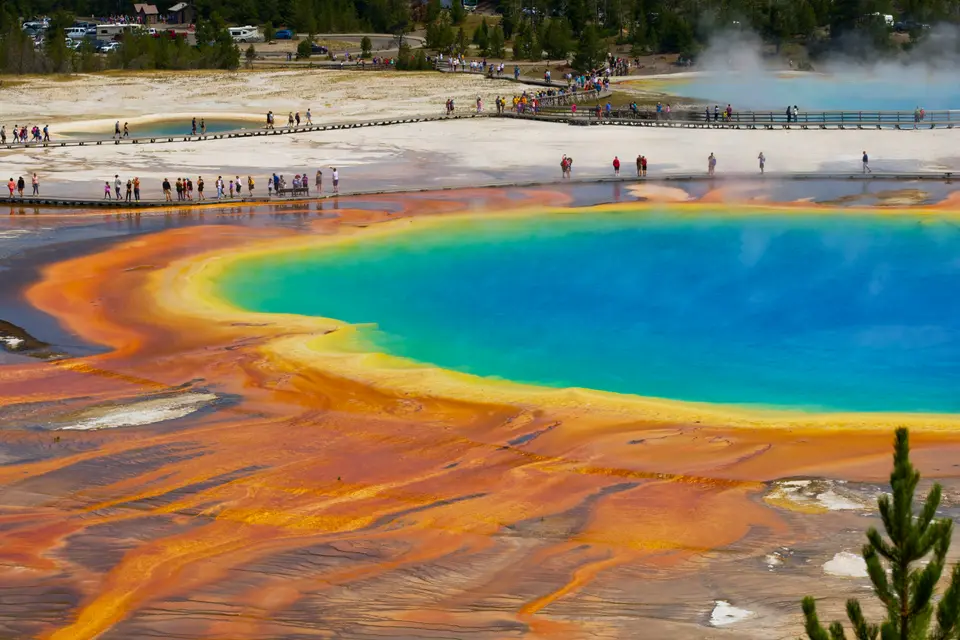
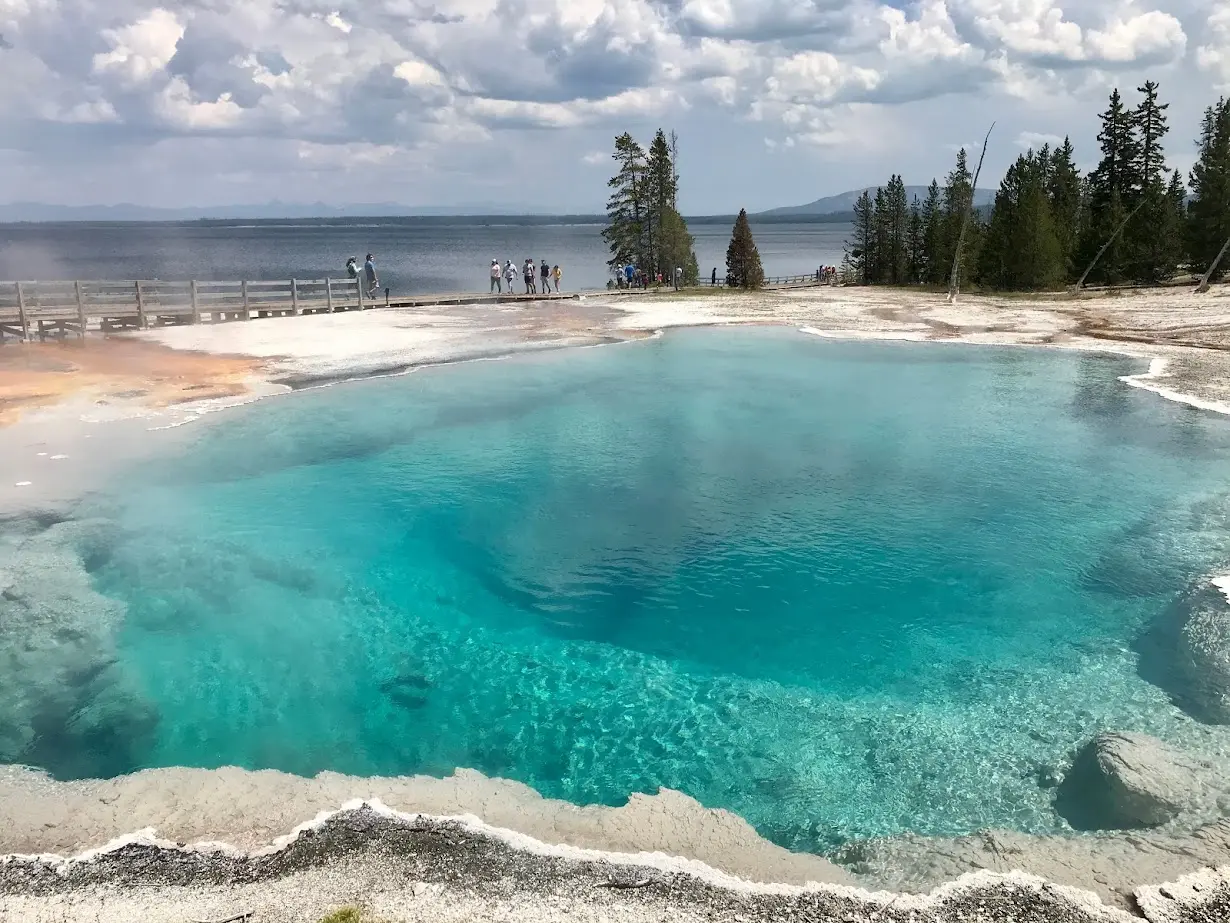
In winter, when standard road access is limited, visitors can explore the park through guided tours using snow coaches or snowmobiles. [1] The geothermal landscape itself — more than 300 geysers and over 10,000 thermal features including hot springs, mudpots, and fumaroles — is a year-round spectacle accessible from established viewing areas. [2]
Practical Access
Paved roads connect the main geothermal basins, lakes, and waterfalls throughout the park, and most major features can be reached by car. [1] Winter access relies on guided snow coach or snowmobile tours rather than standard vehicle travel. [1] Weather can shift rapidly at any time of year, and snow is possible in every season, so layered clothing is strongly advised. [2] Summer daytime temperatures typically reach the 70s F at lower elevations, while winter temperatures commonly range from 0 to 20 F, with sub-zero overnight lows. [2]
Restrictions
No specific restrictions noted in the sources.
What Makes It Distinctive
Yellowstone holds more than half of the world's geysers and hydrothermal features, with over 300 geysers representing roughly two-thirds of the global total, a concentration found nowhere else on Earth. [2] The park's supervolcanic foundation — a caldera approximately 34 by 45 miles formed by an eruption 640,000 years ago — drives this geothermal activity and gives the landscape a character unlike any other protected area. [2] It is also the largest megafauna location in the contiguous United States, home to the oldest and largest public bison herd in the country, as well as one of the most reliable places in the world to observe gray wolves in the wild following their reintroduction from Canada in 1995. [1][2] Native Americans have inhabited the Yellowstone region for at least 11,000 years, and researchers have documented more than 1,000 indigenous archaeological sites within the park. [1]
Sources
- Best months: April–October
Things to do
- boating
- camping
- fishing
- hiking
- wildlife viewing
- winter guided tours
Amenities
- live webcams
- multiple lodging options
- nps mobile app
- paved road access
Best time to visit
- summer for warm access
- winter for snow tours
Features
- 10,000+ hydrothermal features
- 3,468 sq mi total area
- 330 bird species documented
- 67 mammal species
- first national park worldwide
- gray wolf population
- largest public bison herd
- supervolcano caldera
- unesco world heritage site
Nearby
- greater yellowstone ecosystem
Good to know
- aquatic invasive species check
- bear spray recommended
- phone: 307-344-7381
Photos