Vík
About
What It Is
Vík, formally Vík í Mýrdal, is the southernmost village in Iceland, situated on the country's Ring Road approximately 180 km southeast of Reykjavík by road [2]. The settlement of around 300 to 750 inhabitants serves as the primary service hub for a stretch of roughly 70 km of coastline along Iceland's south coast [2][3]. The village sits directly south of the Mýrdalsjökull glacier, which caps the Katla volcano, giving the area both its dramatic landscape and its underlying geological hazard [2][3]. The black sand beach at Vík was ranked by Islands Magazine in 1991 as one of the ten most beautiful beaches on Earth [2].
Activities & Experiences
Visitors can walk the black basalt sand beach and observe the offshore Reynisdrangar sea stacks, basalt columns that are the remnants of an older, more extensive cliffline [2][3]. The cliffs west of the beach support seabird colonies, with puffins nesting in the shallow soils during the summer nesting season [2][3]. A monument on the beach commemorates sailors who drowned in the surrounding waters [2]. The nearby Kötlusetur information centre can help visitors plan excursions to surrounding natural attractions [3].
Practical Access
Vík is accessible by car via the Ring Road; the drive from Keflavík International Airport takes approximately three hours [3]. Strætó operates bus service from Reykjavík to Vík roughly seven times per week, with the journey taking around three hours and forty minutes including a layover, and bus fares ranging from 38 to 70 kr [3]. The village itself is compact enough to walk, but a car with four-wheel drive is recommended for reaching surrounding sites on gravel tracks [3]. Most hotels in the area can also help arrange transportation to nearby attractions [3].
Restrictions
Swimming and entering the ocean near the beach is strongly discouraged due to large, unpredictable waves; there have been documented drowning fatalities caused by waves sweeping visitors out to sea [3]. Visitors should exercise extreme caution on the beach itself, as sneaker waves can reach much further inland than expected [3].
What Makes It Distinctive
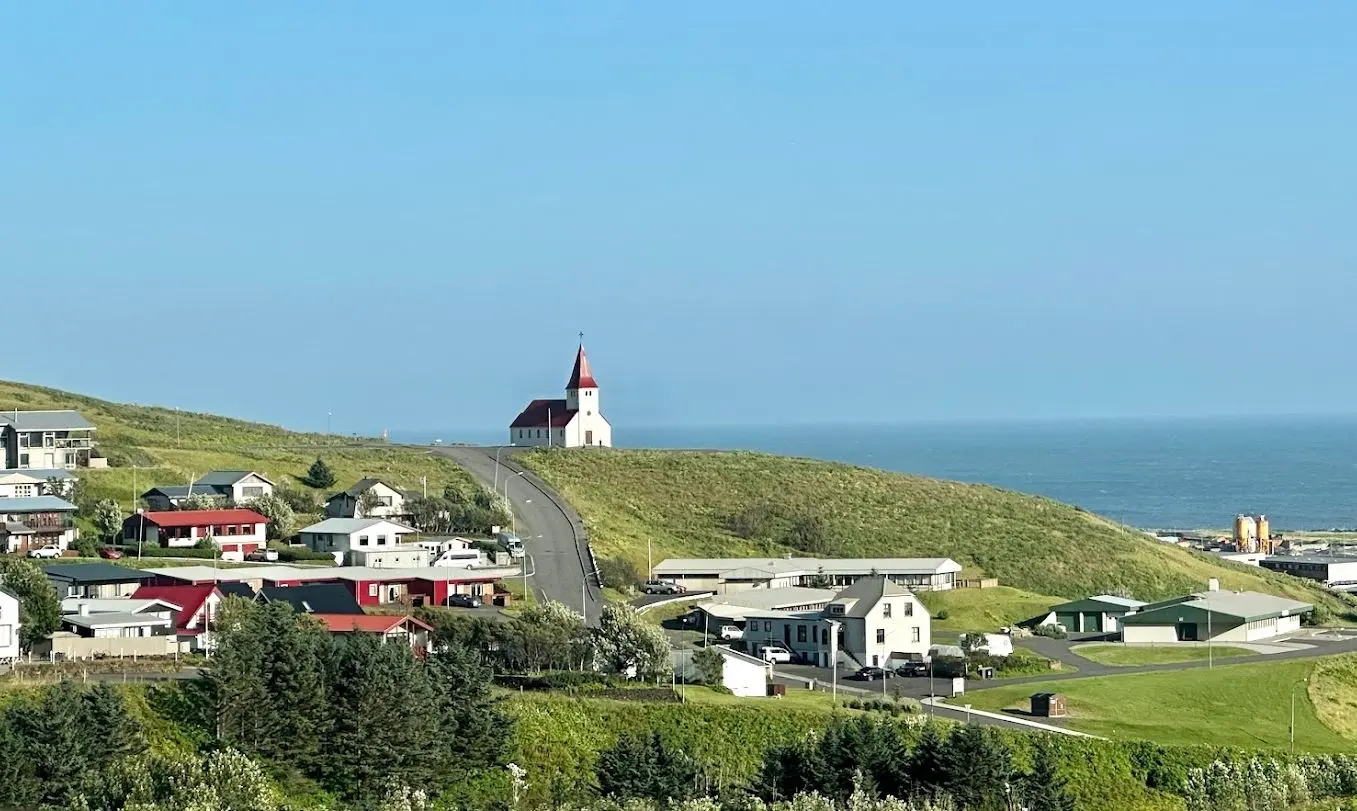
Vík's beach is notable for its black basalt sand, a direct product of Iceland's volcanic geology, and was internationally recognized as one of the world's most beautiful beaches [2]. The combination of the Reynisdrangar sea stacks, active puffin colonies, and the looming presence of the Katla volcano beneath Mýrdalsjökull creates a landscape found nowhere else [2][3]. The town's church, Víkurkirkja, sits on a high hill and is considered the only structure that would survive a major Katla flood event, a fact that underscores the village's unusual relationship with volcanic risk [2].
Sources
- Best months: June–August
Access & fees
- beach entry free
Things to do
- lava show visit
- seabird watching
Best time to visit
- summer for puffins
Features
- black basalt sand beach
- reynisdrangar sea stacks
- southernmost iceland village
Nearby
- skógafoss waterfall
Good to know
- 4wd vehicle recommended
- bus from reykjavík
- sneaker wave danger