Tulum Ruins
About
What It Is
The Tulum Ruins are a pre-Columbian Maya archaeological site situated on a coastal cliff above the Caribbean Sea, in Tulum, Quintana Roo, Mexico [2]. The site is the most prominent attraction in the Tulum area and draws visitors as a heritage destination representing Maya civilization on the Yucatan Peninsula [2]. The town of Tulum, which grew substantially from a small fishing village into a tourism hub beginning in the 1990s, developed largely in response to increasing interest in the ruins [2].
Activities & Experiences
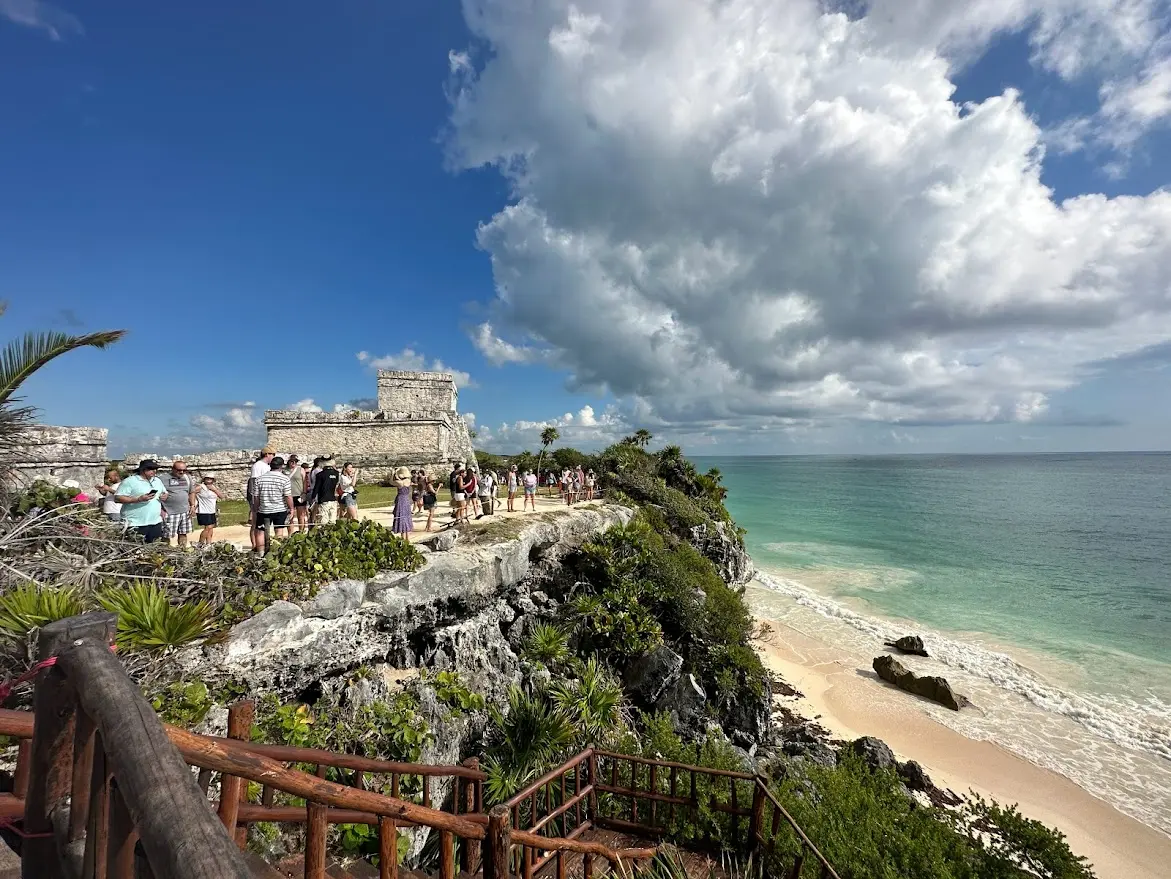
Visitors can explore the archaeological remains of the Maya site, which sit above the Caribbean coastline, offering views that combine ancient structures with the sea below [2]. The broader Tulum area, accessible from the ruins, also provides access to cenotes such as Gran Cenote and Dos Ojos, which are used for swimming and diving, as well as the nearby Sian Ka'an Biosphere Reserve, a UNESCO World Heritage Site with mangroves, lagoons, and wildlife [2]. The town itself offers local art galleries, boutique shops, and a culinary scene combining traditional Mexican and international food [2].
Practical Access
The ruins are located approximately 2 km from the center of Tulum town [2]. The area is reached via Mexican Federal Highway 307, which connects Tulum to Cancun to the north and Chetumal to the south [2]. Local transportation options include buses, colectivos (shared vans), taxis, and bicycle rentals; private shuttle services are also widely used [2]. Tulum International Airport (TQO) opened in December 2023 and offers domestic and international flights, providing an additional arrival option [2]. The Tulum railway station on the Tren Maya also serves the area [2].
Restrictions
No specific restrictions noted in the sources.
What Makes It Distinctive
The Tulum Ruins occupy a rare position among Maya archaeological sites: they stand directly on a cliff edge above the Caribbean Sea, combining a heritage experience with dramatic coastal scenery [2]. The site anchored the development of an entire tourism region, making it the historical and geographic focal point of the Riviera Maya corridor [2]. Its proximity to diverse natural attractions, including cenotes, a UNESCO biosphere reserve, and other Maya sites such as Coba, gives it unusual range as a base for regional exploration [2].
Sources
- Best months: December–May