The Oculus
About
What It Is
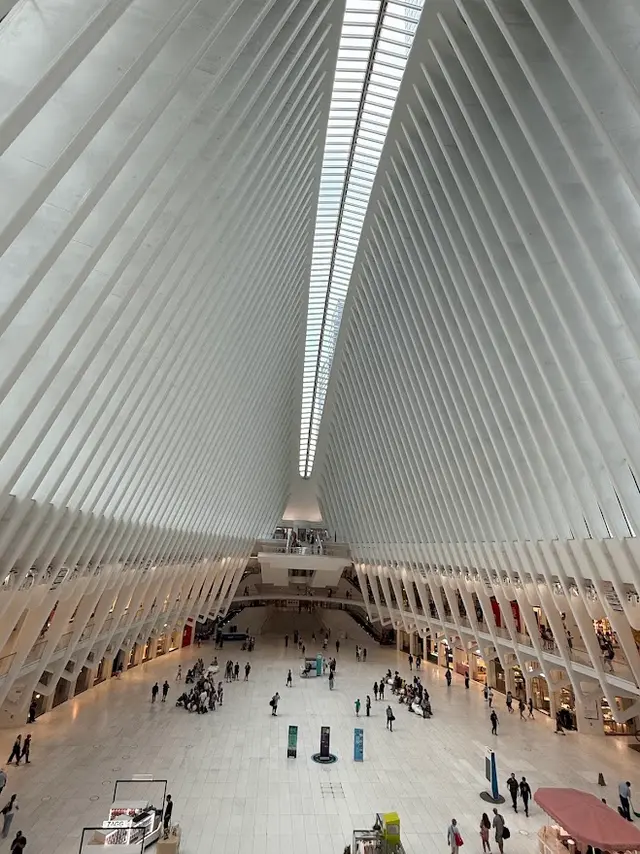
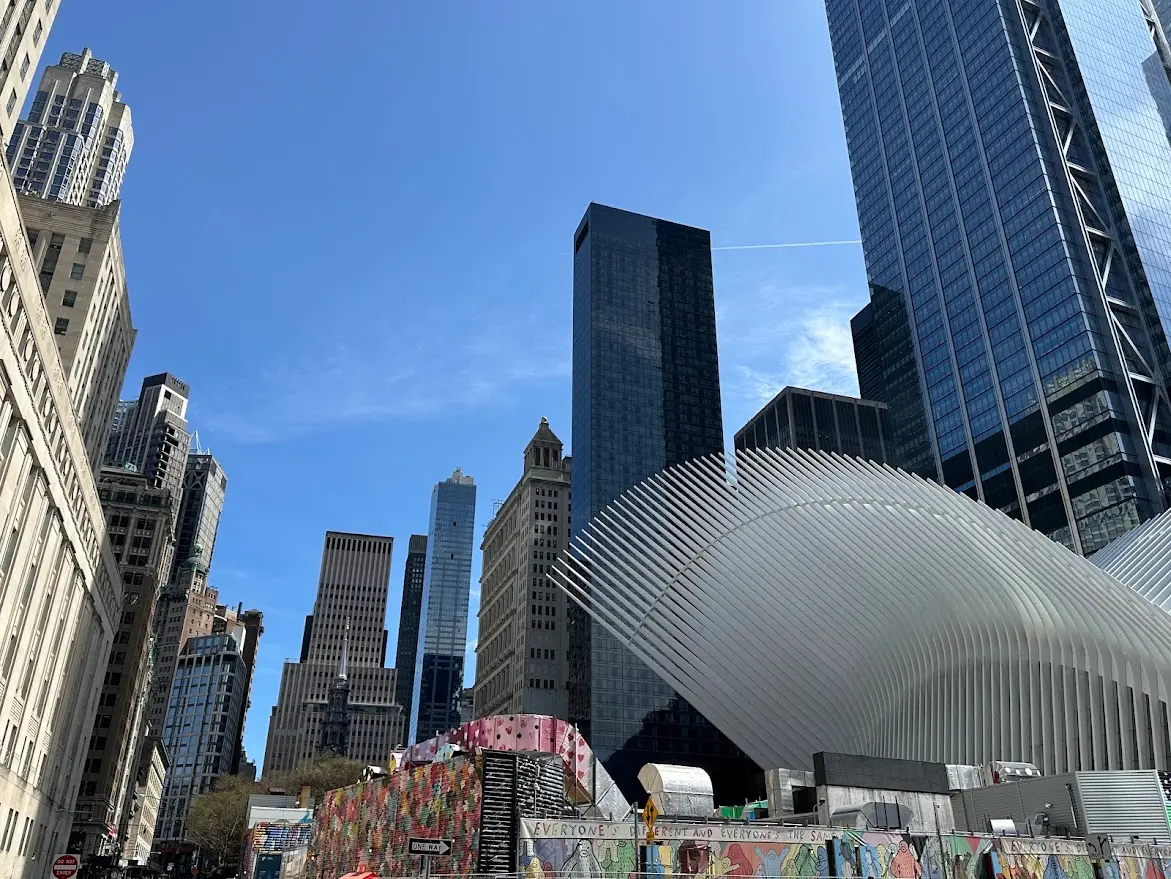
The Oculus is a major transportation hub and public space located at the World Trade Center campus at 50 Church Street in Lower Manhattan, New York City. Owned and operated by the Port Authority of New York and New Jersey, it serves as the central structure of the World Trade Center Transportation Hub, accommodating 12 subway lines and the World Trade Center PATH station [1]. The building was conceived as part of the broader World Trade Center masterplan by Daniel Libeskind and designed by architect Santiago Calatrava [1]. Its white steel-rib structure, which evokes the image of a hand releasing a dove, draws over a million visitors and commuters each week [1].
Activities & Experiences
Visitors can explore the main concourse floor, which hosts a rotating calendar of weekly programs including farmers markets, art exhibits, musical performances, and retail events [1]. The building's architectural design creates a notable light phenomenon: on each September 11, between 8:46 am and 10:28 am, sunlight enters through the central skylight and casts a moving beam called the Wedge of Light across the floor, with two parallel columns of light appearing at the times corresponding to the attacks on the original Twin Towers [1]. The hub also connects pedestrians to Brookfield Place via the West Concourse and provides direct access to One World Trade Center, 3 World Trade Center, and 4 World Trade Center [1].
Shopping and dining options from retailers leased and operated by Unibail-Rodamco-Westfield are available throughout the concourse [1]. The PATH station below, rebuilt and reopened in 2016, is the busiest in the PATH system, recording over 14 million passengers in 2025 [2].
Practical Access
The Oculus is accessible from multiple entry points across the 16-acre World Trade Center campus [1]. It is served by 12 New York City subway lines at nearby stations and by the World Trade Center PATH station directly beneath the structure, as well as numerous bus routes [1][2]. No admission fee is required to enter the public areas of the Oculus [1]. Street-level access is restricted overnight between 1:00 am and 5:00 am [1]. The facility is listed as accessible [2].
Restrictions
Street-level access to the Oculus is limited between 1:00 am and 5:00 am daily [1]. No other specific restrictions are noted in the sources.
What Makes It Distinctive
The Oculus is distinguished by its deliberate solar alignment: the structure is oriented so that on every September 11, sunlight tracks across the interior floor between the exact times of the 2001 attacks, creating the Wedge of Light as a built-in memorial feature [1]. This integration of architectural form, transit function, and commemorative purpose sets it apart from conventional transportation hubs. Designed by Santiago Calatrava within Daniel Libeskind's World Trade Center masterplan, the building is widely regarded as one of New York City's most significant contemporary architectural works [1].
Sources
- Open year-round
- Typical duration: 1h
Access & fees
- no admission fee
Things to do
- dining
- farmers markets, art, music
- people watching
- photography
- shopping
- sightseeing
- transit hub use
- transportation experience
- urban exploration
Amenities
- color-changing rib lighting
- fully accessible station
Events & seasons
- wedge of light display
Features
- architecture
- campus-wide pedestrian links
- solar memorial alignment
- white steel-rib structure
Nearby
- 9/11 memorial museum
- one world observatory
Good to know
- overnight access limited
Photos