Sagrada Família
About
What It Is
La Sagrada Família (Basílica de la Sagrada Família) is a monumental Roman Catholic basilica in Barcelona, Spain, and the best-known work of Catalan architect Antoni Gaudí. Construction began in 1882, and Gaudí took over the project in 1883, transforming the original neo-Gothic proposal into his highly distinctive architectural and symbolic vision. [1][2]
The basilica combines architecture, sculpture, geometry, natural forms, structural experimentation, light, and extensive Christian symbolism. Construction has continued for generations following Gaudí's plans and surviving documentation. [1][2] Importantly, the entire Sagrada Família is not a UNESCO World Heritage Site. UNESCO specifically includes Gaudí's Nativity Façade and Crypt as part of the serial World Heritage property Works of Antoni Gaudí. [2]
Activities & Experiences
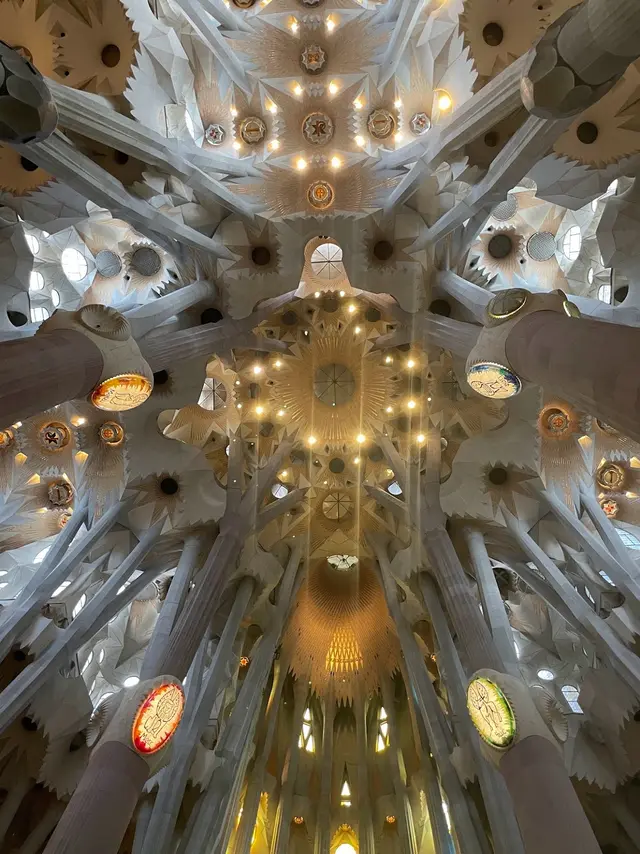
- Basilica Interior Visit — Enter the vast nave to experience Gaudí's forest-inspired columns, branching structural forms, geometric vaults, and extensive use of natural light.
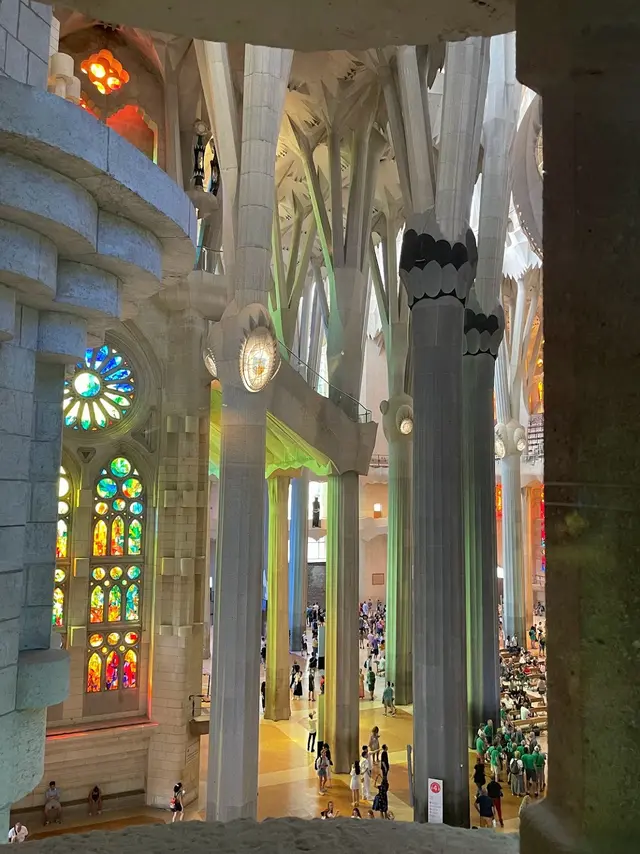
- Stained-Glass Viewing — Observe how colored light changes throughout the interior as sunlight passes through the basilica's stained-glass windows. The official visitor experience specifically emphasizes the changing colors and light as a defining feature of the building. [1]
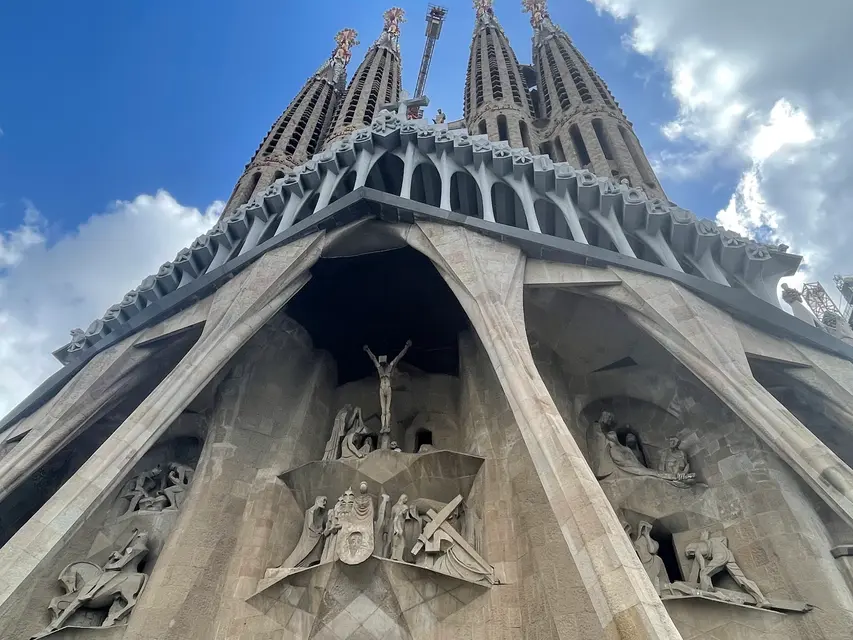
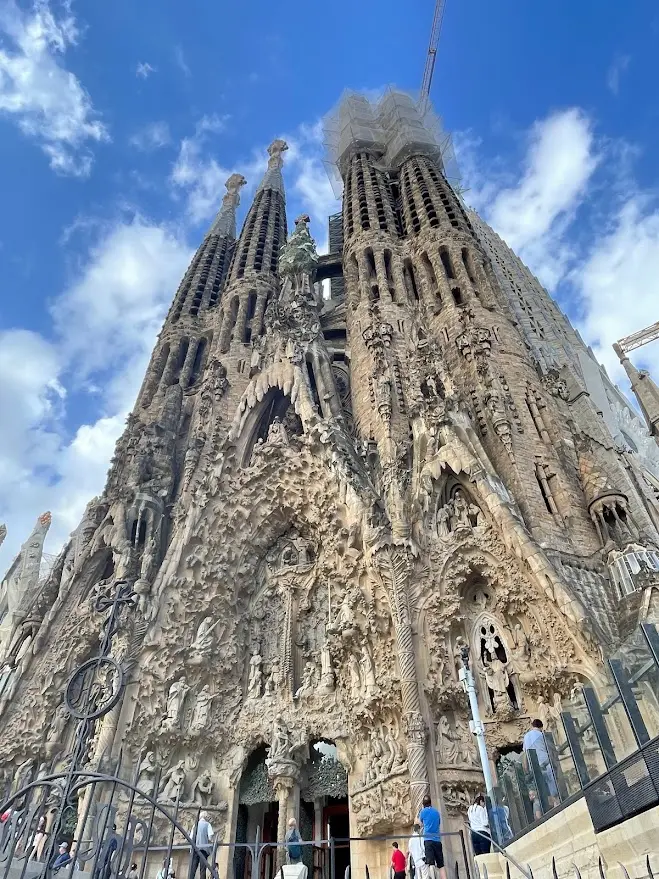
- Nativity Façade — Examine the highly detailed façade dedicated to the birth and early life of Jesus. This is one of the portions of the Sagrada Família personally overseen by Gaudí and is included in UNESCO's Works of Antoni Gaudí World Heritage designation. [2]
- Passion Façade — Explore the dramatically different façade devoted to Christ's Passion and death, characterized by a much more austere and angular sculptural treatment. [1]
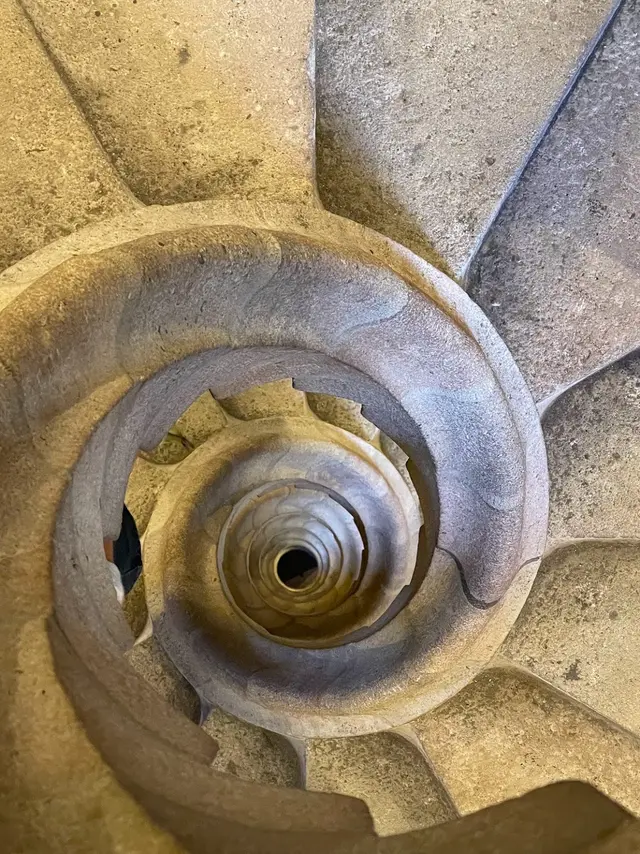
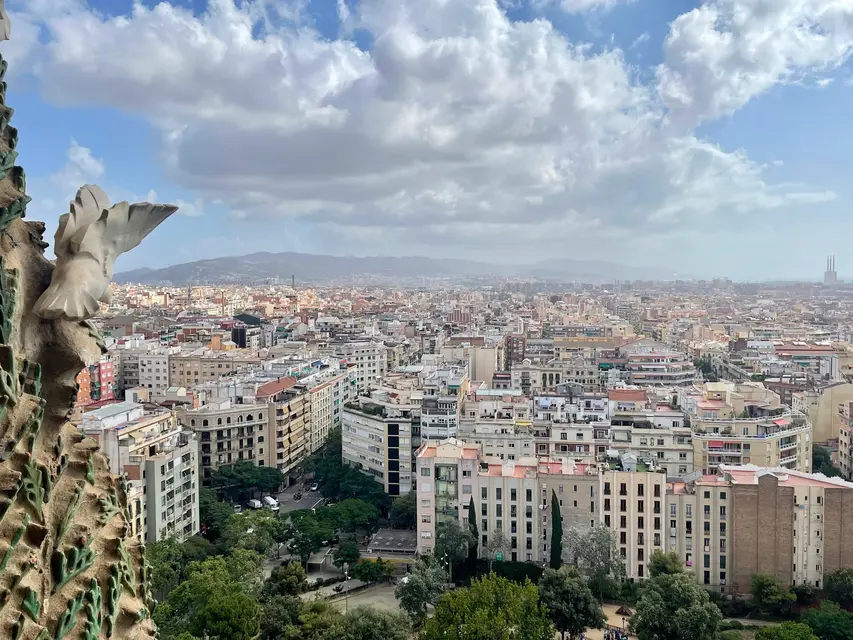
- Tower Visit — With a tower ticket, ascend either the Nativity Façade tower, which provides views toward eastern Barcelona, or the Passion Façade tower, which looks toward the city center. Visitors take an elevator up and descend on foot by stairs. [3]
- Sagrada Família Museum — Learn about the basilica's history, Gaudí's design process, construction methods, models, and the continuing development of the project. Museum access is included with standard admission. [1]
- Architecture & Design Observation — Examine Gaudí's integration of geometry, engineering, sculpture, religious symbolism, and forms inspired by nature.
- Photography — Photograph the architecture, façades, interior columns, stained glass, and changing patterns of colored light. Personal photography is permitted subject to the basilica's rules. [4]
- Official Audioguide — Use the official app-based audioguide, available in 19 languages, to explore the architecture and symbolism. Standard admission includes the audioguide. [1][5]
- Augmented-Reality Experience — The official app includes “What you don't see,” an augmented-reality experience revealing areas and elements of the basilica not normally visible to visitors. [1][5]
- Quiet / Contemplative Visit — Every day from 9:00–10:00 AM, the basilica observes a designated quiet hour intended to provide a more contemplative experience. [4]
Practical Access
Admission is by timed ticket, and visitors must enter at the time indicated on their ticket. Tickets are nominative, and visitors may be required to show official photo identification. [1][4] As of 2026, standard individual admission is €26, including entrance to the Basilica, museum, official app, and audioguide. Admission including a tower visit is €36. Guided-tour options are also available. Prices should be verified before visiting because they may change. [1][6] The official site estimates approximately 1 hour for a standard visit and around 1 hour 30 minutes when including a tower. Visitors may remain in the Basilica and museum longer within operating conditions. [1][3] Advance purchase is strongly advisable. Visitors with advance tickets can enter without waiting in the regular ticket-purchase queue. [7] The Basilica is accessible to visitors with reduced mobility, and wheelchairs are available. The towers, however, are not accessible to visitors with reduced mobility. [7] The official audioguide is delivered through the Sagrada Família app, so visitors are advised to download the app in advance, bring earphones, and arrive with a charged phone. [1][5]
Restrictions
- Visitors must hold a valid timed ticket and arrive for their designated entry time. [1]
- Tickets are personal and non-transferable, and official identification may be requested. [4]
- All bags, backpacks, luggage, and personal items are subject to security inspection. [4]
- Appropriate clothing is required because the Sagrada Família is an active Catholic basilica. Visitors may not enter barefoot. [1][4]
- Smoking and eating are prohibited on the Basilica grounds. [4]
- Tripods are prohibited unless prior professional accreditation has been granted. Commercial or advertising photography and filming require advance written authorization. [4]
- During the daily 9:00–10:00 AM quiet hour, visitors must remain quiet and use earphones with audioguides or other audio devices. [4]
- Children under 6 cannot visit the towers. Visitors between ages 6 and 16 must be accompanied by an adult. [3]
- Tower visitors must use the elevator to ascend and stairs to descend. [3]
- Bags and backpacks must be placed in the provided lockers before entering the towers. [3]
- Tower access is not permitted for people with reduced mobility and is restricted for certain conditions that could make the descent unsafe, including vertigo, claustrophobia, some heart or respiratory conditions, and pregnancy. [8]
- Tower access can be suspended because of adverse weather or safety conditions. [8]
- Visitors under 16 must be accompanied by an adult during the Basilica visit. [1]
What Makes It Distinctive
La Sagrada Família is distinctive because Gaudí conceived virtually every architectural element as part of a unified system combining structure, nature, geometry, light, sculpture, and Christian symbolism. Inside, columns branch upward like trees, creating the impression of a monumental stone forest. Colored light from the stained-glass windows changes with the position of the sun, making light itself part of the architectural experience. [1] Its façades tell different parts of the Christian story through radically different visual languages. The elaborate Nativity Façade, associated directly with Gaudí's lifetime, contrasts dramatically with the severe geometry and sculptural forms of the Passion Façade. Its UNESCO status is particularly significant. UNESCO recognizes Gaudí's work as an exceptional creative contribution to modern architecture and construction technology, specifically identifying the Sagrada Família's Nativity Façade and Crypt among the seven properties comprising the Works of Antoni Gaudí. [2] The building is also unusual because visitors experience a world-famous architectural monument that is still being constructed. More than a century after work began, architecture, craftsmanship, engineering, religious practice, and active construction continue to coexist at the site. [2]
Sources
- Open year-round
- Typical duration: 2h
- Hours: Mo-Th 05:00-00:00; Fr 05:00-02:00; Sa 05:00-00:00; Su 00:00-24:00
Access & fees
- paid entry, advance booking
Things to do
- architecture & design observation
- attend religious mass
- basilica interior visit
- nativity façade
- official audioguide
- passion façade
- photography
- quiet / contemplative visit
- sagrada família museum
- stained-glass viewing
- tower visit
- virtual tour available
Amenities
- official mobile app
- on-site store
- tmb information center
Events & seasons
- concerts & exhibitions
- la mercè open doors
Features
- active catholic basilica
- augmented-reality experience
- gaudí-designed basilica
- under construction since gaudí
Nearby
- gaudí house museum
Photos