Pioneer Square
About
What It Is
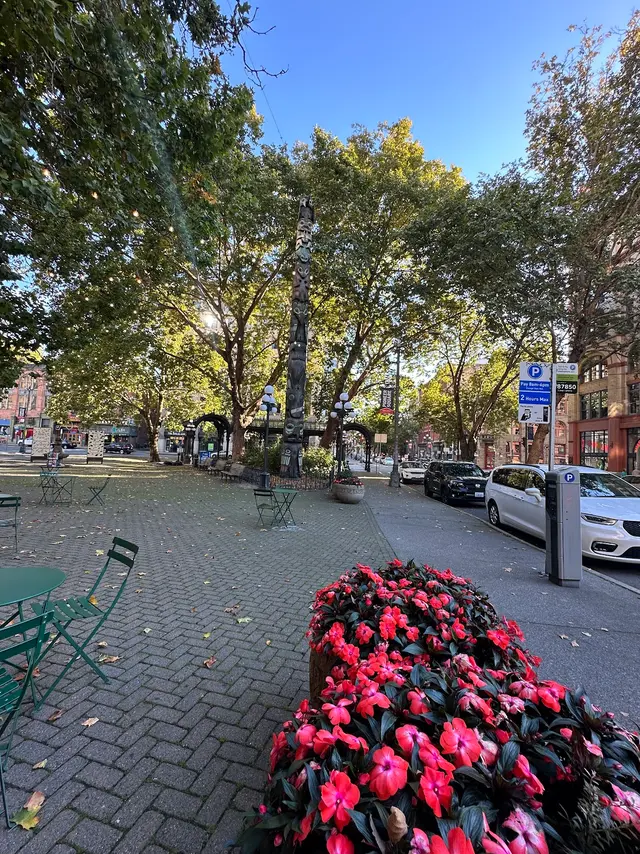
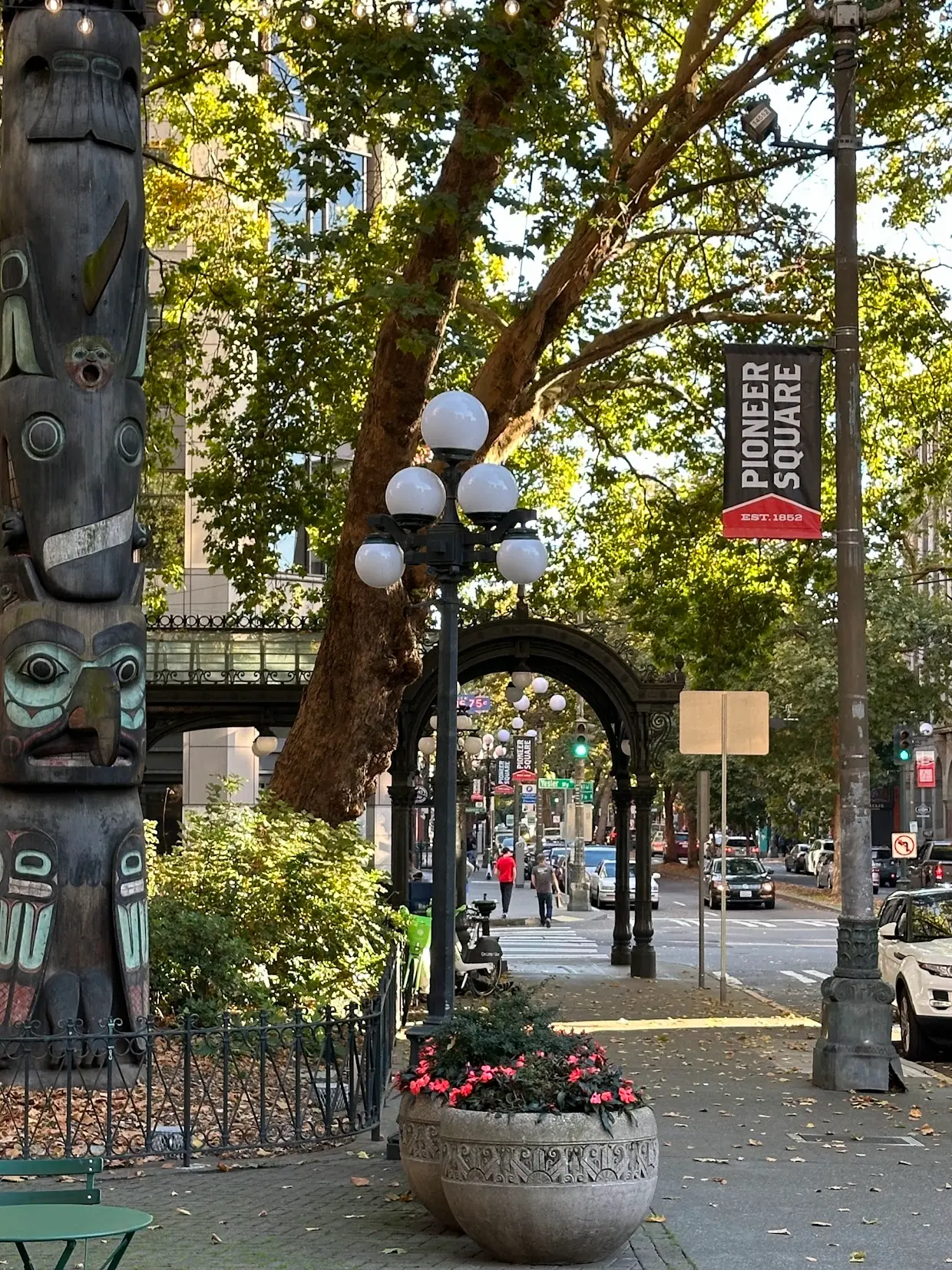
Pioneer Square is Seattle's oldest neighborhood, occupying the southwest corner of downtown Seattle, Washington [1]. The area was first settled by non-Native Americans in 1852 and served as the city's original commercial and civic center [5]. Its name derives from a small triangular plaza near the intersection of First Avenue and Yesler Way, though locals use the name to refer to the broader surrounding district [1][2]. The Pioneer Square–Skid Road Historic District, covering roughly 30 acres and anchored by that plaza and several surrounding blocks, is listed on the National Register of Historic Places [1][5].
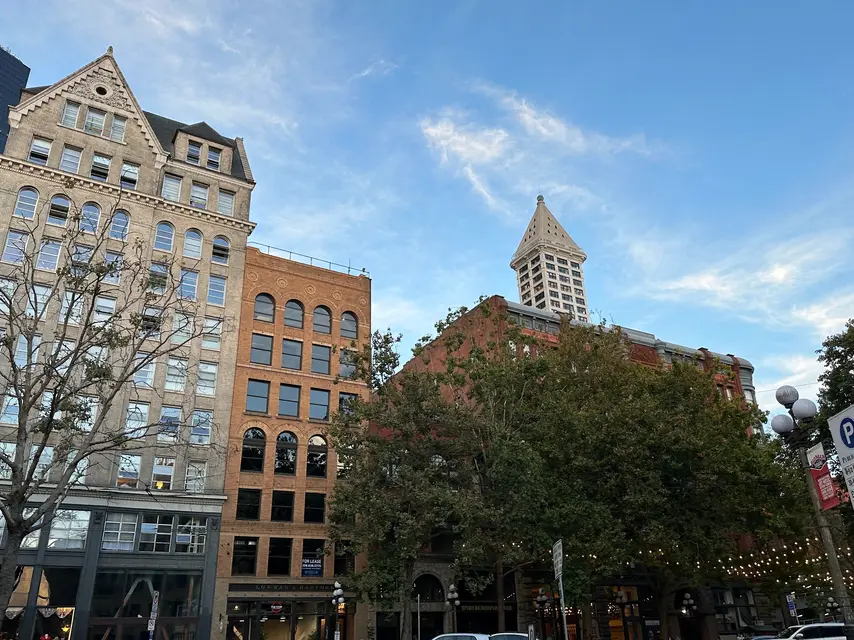
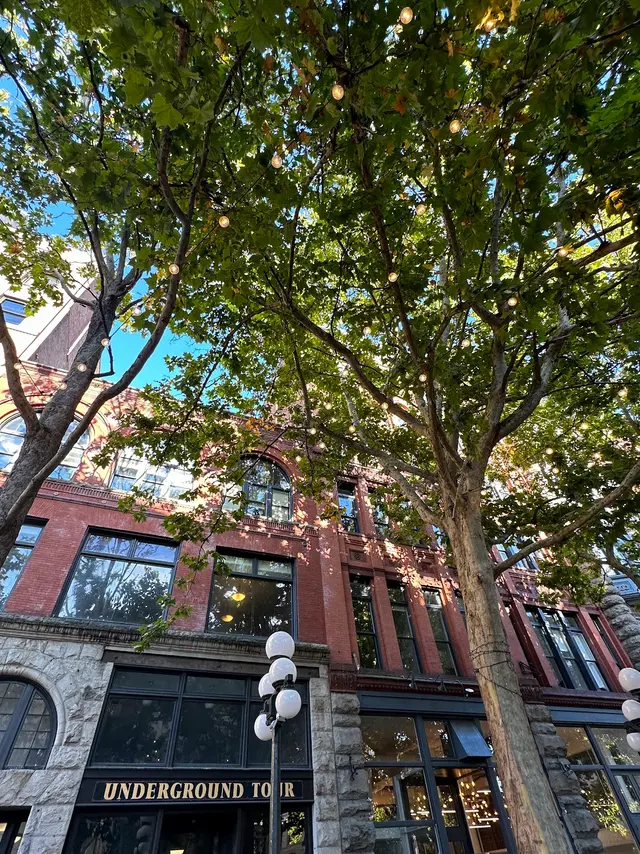
The neighborhood's character is defined by the brick and stone buildings constructed after the Great Seattle Fire of June 6, 1889 destroyed nearly all of the earlier wooden structures [1][5]. Most of these buildings are examples of Richardsonian Romanesque architecture, erected within a decade of the fire [1][5]. Before European settlement, the site was a Duwamish winter village called Dzidzilalich, meaning "little crossing-over place" in Lushootseed, with a population of around 200 people living in approximately eight longhouses [1][5].
Activities & Experiences
Visitors can tour the neighborhood's subterranean level through Bill Speidel's Underground Tour or Beneath the Streets, both of which explore the original street level that existed before the 1889 fire [4]. Smith Tower, once the tallest skyscraper west of the Mississippi River, offers an open-air observation deck on its 35th floor [4]. The Klondike Gold Rush National Historic Park Seattle Unit, located at 319 2nd Ave S, is staffed by National Park Service rangers and volunteers who provide context on Seattle's role as the gateway for Klondike stampeders in 1897–1898; the museum holds artifacts and historical photographs, and rangers conduct free walking tours of the Pioneer Square area in summer [2].
The neighborhood supports a high concentration of art galleries, including J. Rinehart Gallery focusing on Puget Sound artists, Stonington Gallery highlighting contemporary Indigenous works, and Gray Sky Gallery featuring multiple mediums [4]. Occidental Street between Washington and Jackson Streets is closed to cars and functions as a pedestrian mall lined with galleries and shops [2]. Waterfall Garden Park, situated on the site of the first UPS headquarters, and Pioneer Square Habitat Beach offer quieter outdoor spaces within the district [4].
Practical Access
From downtown Seattle, the walk to Pioneer Square is short and not steep [2]. Link light rail operated by Sound Transit serves the area at Pioneer Square Station at James St and 3rd Ave and at International District/Chinatown Station at Jackson St and 5th Ave; trains run every 8–15 minutes from 5:00 to midnight, with a fare of USD 3 (as of December 2025) [2]. The First Hill Streetcar runs along Jackson Street connecting the district to First Hill and Capitol Hill, with its southern terminus in Pioneer Square on S Jackson between S 1st Ave and Occidental [2]. King Street Station at 4th and Jackson is served by Amtrak and Sounder commuter rail [2]. A few pay parking lots and limited street parking are available in the area [2].
The Klondike Gold Rush National Historic Park Seattle Unit is open daily 9AM–5PM, except Thanksgiving, Christmas, and New Year's Day [2]. The neighborhood is compact with small blocks well suited to exploration on foot [2].
Restrictions
No specific restrictions noted in the sources.
What Makes It Distinctive
Pioneer Square represents the physical origin point of modern Seattle, preserving an unusually intact ensemble of late 19th-century Richardsonian Romanesque architecture that survived because the business district shifted northward after the fire, limiting later redevelopment [1][2][5]. The neighborhood layers Indigenous history — the Duwamish village of Dzidzilalich occupied the site for centuries before European settlement — with the city's founding era and its Gold Rush prominence, making it one of the few urban districts in the American Northwest where all three periods remain legible in the landscape [1][5]. The combination of underground tours revealing the pre-fire street level, a federally operated Gold Rush museum with free ranger-led walks, active art galleries, and a protected historic streetscape gives Pioneer Square a density of cultural experience uncommon in a single walkable neighborhood [2][4].
Sources
- Pioneer Square, Seattle
- Alliance for Pioneer Square – Official Neighborhood Organization
- Pioneer Square – Seattle Parks and Recreation (seattle.gov)
- Pioneer Square – Visit Seattle (Official Tourism Board)
- About Pioneer Square – Visit Pioneer Square (Official Neighborhood Organization)
- History – Bill Speidel's Underground Tour
Inside
- Open year-round
- Best months: April–October
- Typical duration: 3h
Access & fees
- klondike park free entry
- link light rail fare
Things to do
- antique and bookshop browsing
- art gallery browsing
- gold rush museum visit
- ranger-led walking tours
- underground tour
Best time to visit
- summer for ranger programs
Events & seasons
- free nps walking tours
Features
- indigenous heritage: coast salish land
- national register historic district
- pedestrian mall
- richardsonian romanesque architecture
- seattle's oldest neighborhood
Nearby
- international district
- king street station
- sodo sports stadiums
Good to know
- klondike park hours
- light rail frequency
Photos