Old Québec
About
What It Is
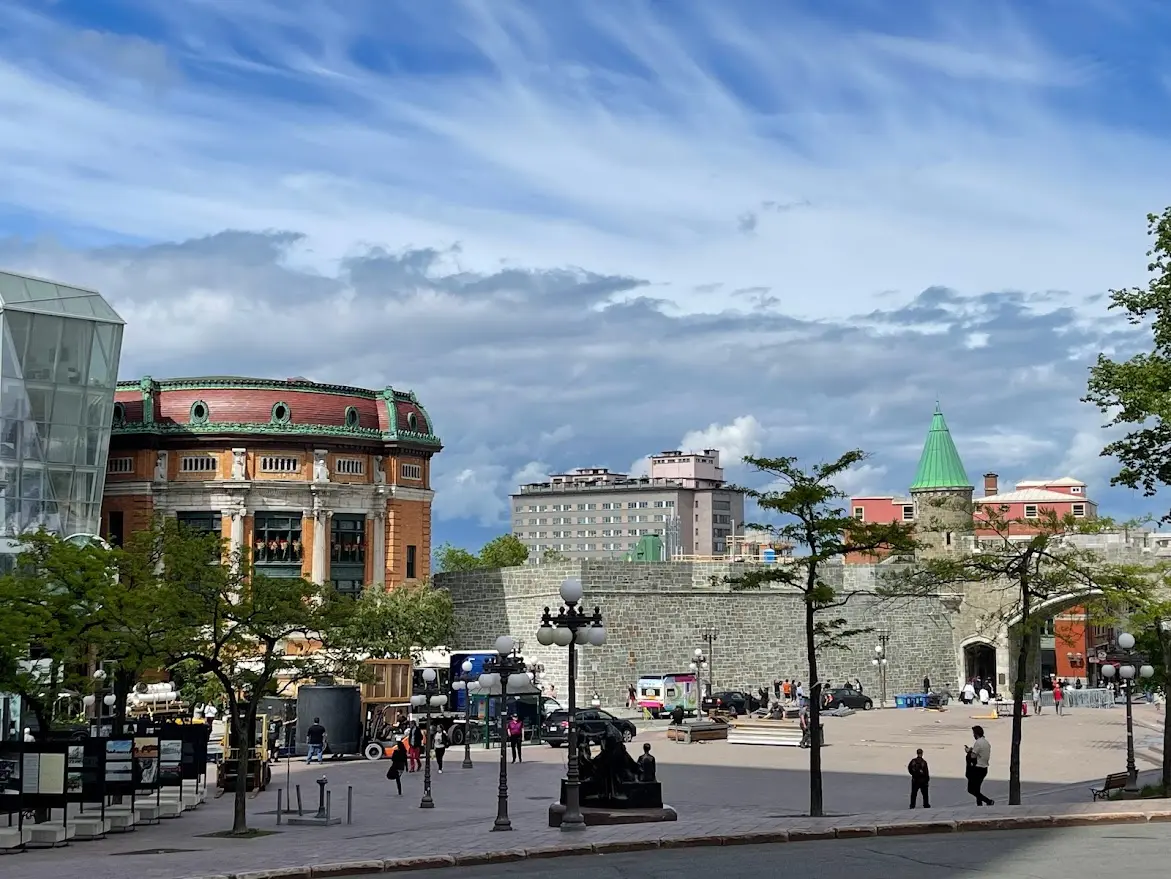
Old Québec is a historic urban district located in Québec City, Québec, Canada, recognized as a UNESCO World Heritage Site [1]. It is the oldest settled area in the region, with roughly 400 years of documented history, and is distinguished by its intact fortified walls that encircle the old city [1]. The district encompasses several distinct sub-areas, including Place Royale, Petit-Champlain, and the Dufferin Terrace promenade, each reflecting the layered French and British colonial heritage of the city [1].
Activities & Experiences
Visitors can walk along the fortified walls and through four historic gates that surround the old city [1]. Dufferin Terrace offers views of the St. Lawrence River and the Chateau Frontenac, with live entertainment available in summer and a toboggan run operating in winter [1]. Beneath the terrace, the remains of the Saint-Louis Forts and Chateaux are accessible as a historic site [1]. Petit-Champlain, a pedestrian street, contains local shops, art galleries, and bistros, while the Old Port area supports gallery browsing, antique shopping, and boat tour departures [1]. Guided walking tours of the district are recommended for historical context [1].
The Citadelle de Quebec, situated atop Cap Diamant, is the largest British fortress in North America and houses the Musee Royal 22e Regiment [1]. The Basilica Cathedral Notre-Dame de Quebec, the site of the first Catholic parish north of the Spanish colonies, is also located within the district and contains the only Holy Door outside Europe [1]. Place Royale marks the official founding site of Quebec City and features period architecture reflecting both French and British influences [1].
Practical Access
Old Quebec is best explored on foot, and the sources recommend this as the primary mode of getting around the district [1]. No specific information on parking, transit, fees, hours, reservations, or typical visit duration is provided in the available sources.
Restrictions
No specific restrictions noted in the sources.
What Makes It Distinctive
Old Quebec holds the distinction of being the only walled city north of Mexico, making its fortifications a genuinely rare urban feature in the Western Hemisphere [1]. The district is a living community rather than a preserved-only heritage zone, remaining active and visited across all four seasons [1]. The concentration of nationally and internationally significant sites within a walkable area, from a UNESCO-listed streetscape to the only Holy Door outside Europe, gives it a density of heritage landmarks uncommon among North American destinations [1].
Inside
- Open year-round
- Typical duration: 3 days
Access & fees
- best visited on foot
- none for street exploration
Things to do
- antique shop browsing
- art gallery browsing
- bistro dining Petit-Champlain
- boat tour departure
- château frontenac tour
- gallery and antique shopping
- guided walking tour
- overnight hotel stay
- self-guided walking
- toboggan run
- visiting basilica cathedral notre-dame
- visiting citadelle de quebec
- visiting place royale
- walking the ramparts
Amenities
- pedestrian shopping street
- underground historic site
Best time to visit
- all seasons
- summer and winter both viable
Events & seasons
- live entertainment
Features
- ~400 years of history
- density of heritage landmarks walkable
- Dufferin Terrace expanded twice
- first Catholic parish north of Spanish colonies
- fortified walls and four gates
- founding site of Québec City
- French and British period architecture
- full of charming little streets and local shops
- largest british fortress in north america
- living community all seasons
- most photographed hotel in world
- Musée Royal 22e Régiment on site
- named after Governor General Lord Dufferin
- only holy door outside europe
- only walled city north of mexico
- river views from broad promenade
- saint-louis forts archaeological remains
- the only walled city north of mexico
- unesco world heritage site
Nearby
- montmorency falls
Good to know
- best explored on foot