Nk'Mip Desert Cultural Centre
About
What It Is
The Nk'Mip Desert Cultural Centre (pronounced "in-ka-meep") is an interpretive centre in Osoyoos, British Columbia, Canada, owned and operated by the Osoyoos Indian Band [2]. It sits within a semi-arid shrub-steppe desert environment approximately 3 km north of the Canada-United States border [2]. The centre's purpose is to present the ecology of the Okanagan Desert alongside the living culture of the Okanagan people, and to advance conservation of desert wildlife [2]. It is adjacent to a 1,600-acre desert conservation area described as one of the most endangered ecosystems in Canada [1][2].
Activities & Experiences
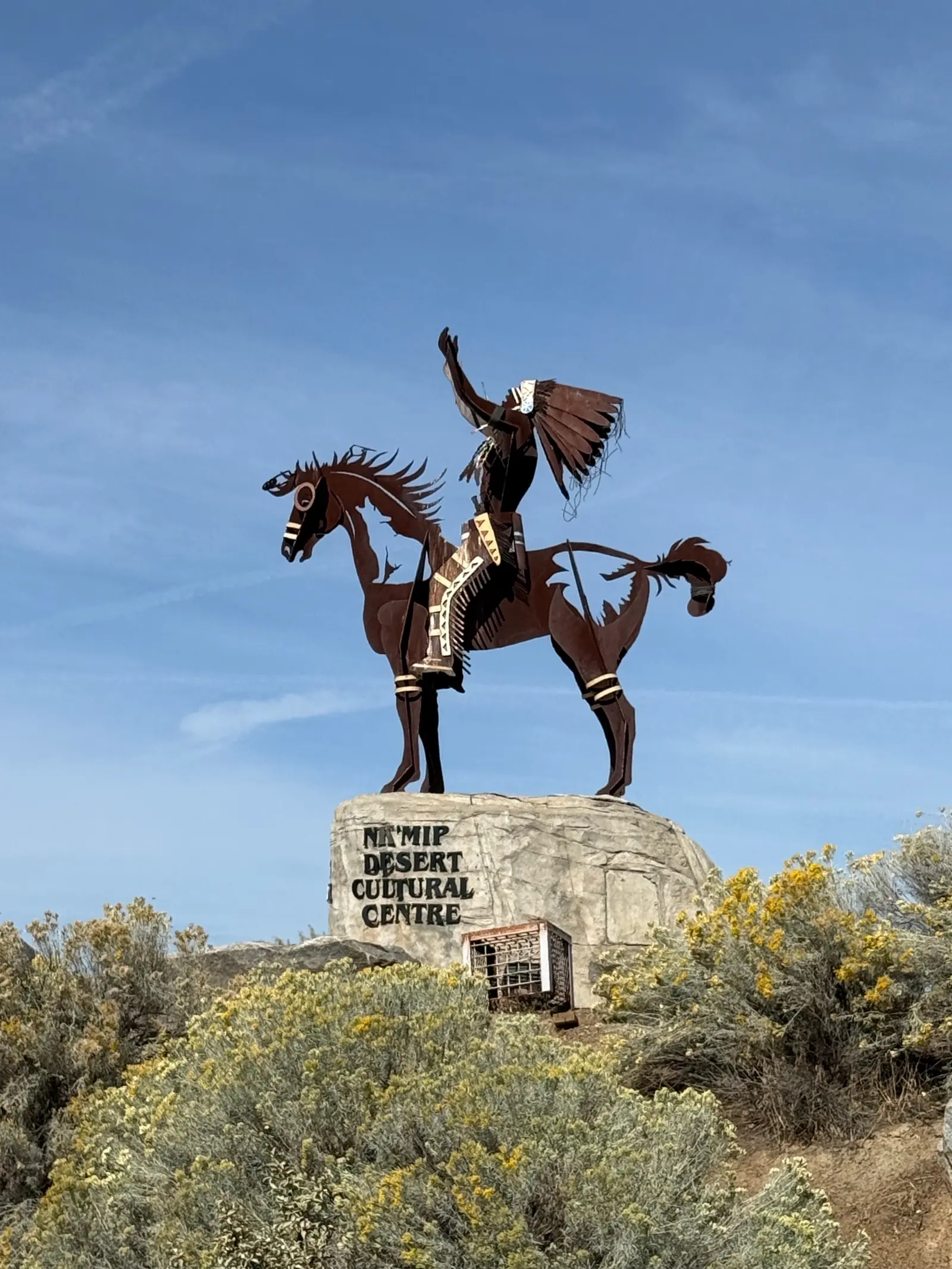
Visitors can move through both indoor and outdoor exhibit galleries, including hands-on displays, educational stations, and a section called Critter Corner where they can see a Western Rattlesnake up close [1]. Two multi-sensory theatre experiences present the legends of Sen'klip (Coyote), the central figure in Okanagan oral tradition [1]. Outdoors, approximately 1.5 km of desert walking trails lead to reconstructed First Nations structures — a tipi, pit-house, and sweat lodge — as well as interpretive sculptures and a viewpoint called the Chief's Lookout [1][2]. Daily guided trail walks with on-site interpreters are available, and a gift shop carries Indigenous handcrafted art and merchandise [1].
Practical Access
The centre is located at 1000 Rancher Creek Road, Osoyoos, BC [1]. As of the source date, operating hours are Thursday through Sunday, 9:00 AM to 4:00 PM; the centre is closed Monday through Wednesday [1]. A visit of 1.5 to 2 hours is recommended to experience the full offering [1]. Visitors walking the outdoor trails should bring water, wear a hat, and use comfortable footwear suited to desert conditions [1]. Group tours and school programs are available, and facility rentals can be arranged through the centre [1].
Restrictions
Pets are not permitted on the trails [1].
What Makes It Distinctive
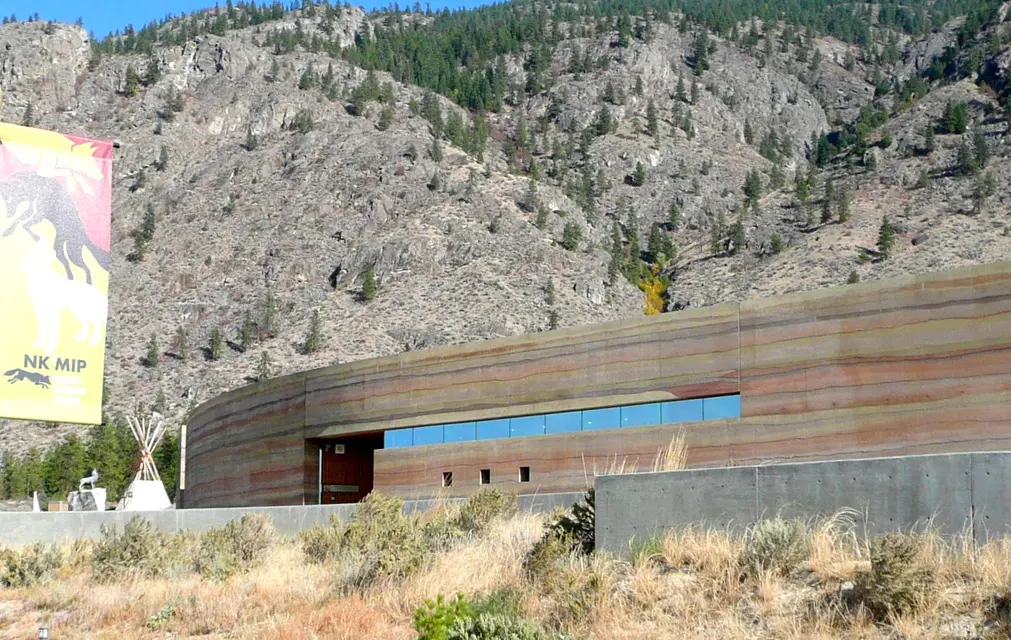
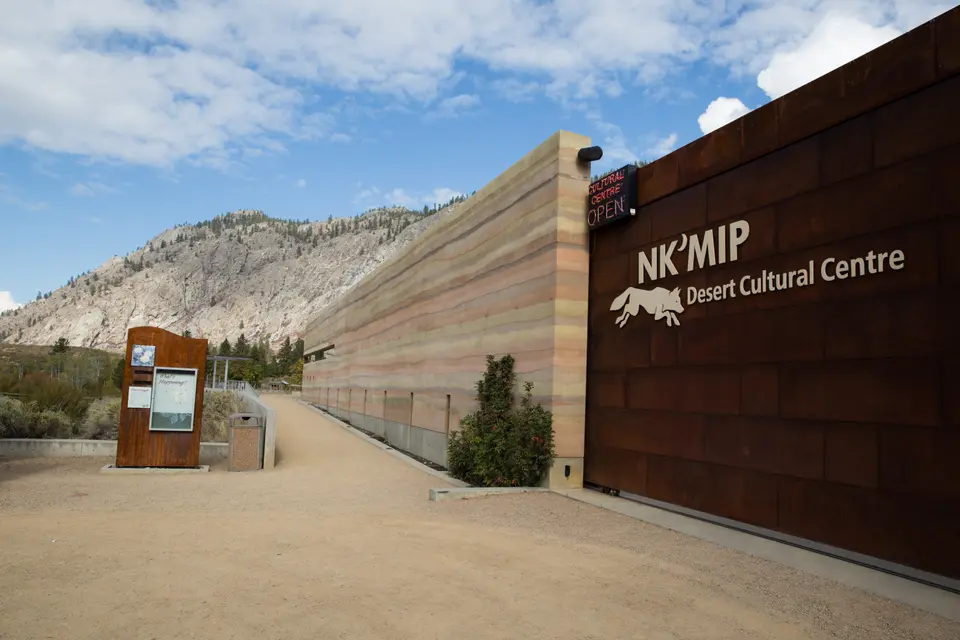
The building itself is a significant architectural achievement: designed by Hotson Bakker Boniface Haden architects and completed in 2006, it is partially underground with the desert landscape continuing over a planted green roof [2]. Its rammed earth facade — constructed from local soils, concrete, and colour additives — measures 80 m long, 5.5 m high, and 0.6 m thick, making it (as of 2014) the largest rammed earth wall in North America, with an insulating value of R-33 [2]. The centre has received multiple national and international awards including the Governor General's Medal in Architecture and the World Architecture Festival Award, both in 2008 [2]. It is also the base for an active Rattlesnake Research Program, supported by Environment Canada, that tracks Western Rattlesnakes and Great Basin Gopher snakes using radio telemetry [2].
Sources
- Open year-round
- Typical duration: 2h
Things to do
- chief's lookout viewpoint
- cultural demonstrations
- cultural exhibits
- desert ecology
- desert trail walking
- gift shop
- guided trail walks
- heritage interpretation
- indigenous heritage learning
- multi-sensory theatre
- wildlife learning
Amenities
- cultural awareness training
- group tours available
- school programs
- venue rentals
Features
- 1,600-acre conservation area
- architectural awards
- green roof
- indigenous art
- indigenous culture
- rammed-earth construction cost
- rammed-earth facade
- rattlesnake research program
- reconstructed village structures
Nearby
- canada–us border
Good to know
- address
- closed days
- no pets on trails
- open 7 days/week
- operating hours
- phone contact
- recommended gear
- recommended visit duration
Photos