Los Haitises National Park
About
What It Is
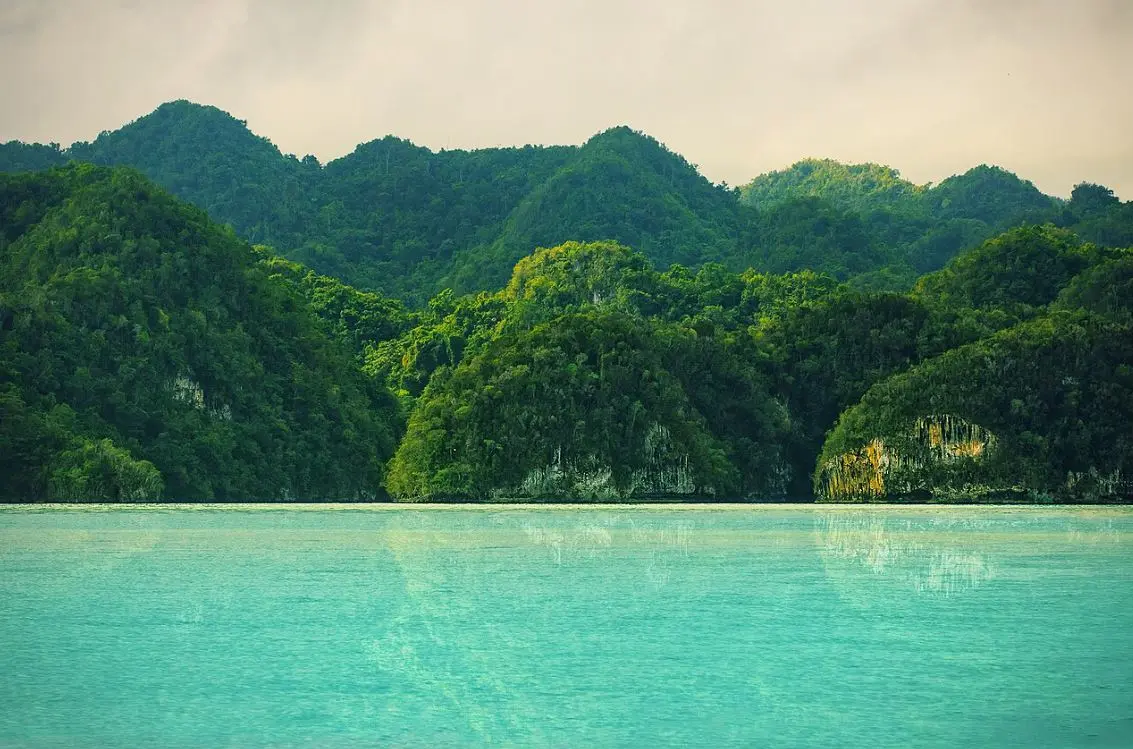
Los Haitises National Park is a protected national park on the remote northeast coast of the Dominican Republic, established by law on June 3, 1976, and significantly expanded in 1996 from 208 to 826 square kilometers [1]. The park sits on a limestone karst plateau characterized by dense clusters of conical hills, sinkholes, and numerous caverns, with a broad mangrove belt along the coast [1]. Its core territory falls within the municipality of Sabana de la Mar in Hato Mayor Province, with portions extending into Monte Plata and Samaná provinces [1]. A visitors center is located at Sabana de la Mar [1].
The park supports two subtropical forest life zones and receives roughly 2,000 mm of rainfall annually, placing it near the top of all Dominican Republic sites for both total precipitation and number of rainy days [1]. This high moisture and habitat diversity make it the most faunally diverse protected area in the country [1].
Activities & Experiences
Visitors explore the park primarily by boat, moving through mangrove channels, past coastal islets, and into San Lorenzo Bay [1]. Cayo de los Pajaros is a notable stop where frigatebirds and pelicans are nearly always visible overhead [1]. Several caverns accessible within the park contain pictographs and petroglyphs left by pre-Columbian peoples, with some artwork possibly predating the Taino culture [1].
Wildlife observation is a central draw: the park holds the largest known population of the endemic Ridgways hawk, along with Hispaniolan amazon parrots, barn owls, stygian owls, brown pelicans, and magnificent frigatebirds [1]. Two critically threatened endemic mammals, the Hispaniolan hutia and the Hispaniolan solenodon, also inhabit the park [1]. The forest canopy includes West Indian mahogany, ceiba, cigar-box cedar, and a wide variety of orchid species [1].
Practical Access
Most visitors arrive by sea, departing from Sabana de la Mar on the east, Sanchez to the north, or Samana across Samana Bay [1]. Land access from the south is possible but requires a four-wheel-drive vehicle [1]. Ecological guides based in Sabana de la Mar have served visitors since at least 2000 [1]. Road access within the park is limited, consistent with its status as a protected virgin forest [1].
No specific hours, entry fees, or reservation requirements are stated in the sources. Visit duration information is not provided in the sources.
Restrictions
The total number of tourists permitted to enter the park at any one time is limited [1]. No additional specific restrictions are stated in the sources beyond this visitor cap.
What Makes It Distinctive
Los Haitises holds the greatest fauna diversity of any protected natural area in the Dominican Republic, a distinction tied directly to its range of habitats spanning karst interior, subtropical forest, coastal mangrove, and marine environments [1]. It is the global stronghold for Ridgways hawk, one of the rarest raptors in the Caribbean, and shelters two mammal species found nowhere else on Earth [1]. Los Haitises rainforest was used as a film location for Jurassic Park.
The combination of accessible pre-Columbian rock art inside natural caverns, dense mangrove waterways, and seabird colonies concentrated on coastal islets creates an experience with few equivalents in the region [1]. Its deliberately limited visitor numbers preserve conditions that more heavily trafficked parks cannot offer [1].
Sources
- Open year-round
- Typical duration: 8h
Access & fees
- guided boat tour from sabana de la mar / caño hondo (direct launch): $50–$85 per person, park entry included
- park entry 300 DOP per person (about $5–6 USD)
- tourist numbers capped
Things to do
- 4wd land access
- birdwatching
- boat tour, mangroves
- boat tours through the mangroves
- boat tours, mangrove canals
- cave art viewing
- cave exploration
- ecotourism with guides
- educational eco-tours
- explore limestone caves
- kayaking (guided in select areas)
- nature interpretation
- photography
- view ancient taíno pictographs and petroglyphs
- visit secluded islands and cays
- wildlife observation
- wildlife viewing
Before you go
- 4wd required for land access
- most access by sea
Amenities
- visitors' center
Best time to visit
- visit during the dry season (december–april) for calmer waters and pleasant weather.
Features
- 826 km² protected area
- high annual rainfall
- limestone karst plateau
- mangrove forest coast
- pre-columbian cave art
- ridgway's hawk stronghold
- taíno-era cave art
Nearby
- cayo de los pájaros
- sabana de la mar town
- samana
- samaná bay
- san lorenzo bay
- sanchez
Good to know
- 4wd land access possible
- boat access primary
- book a guided boat tour with an authorized operator.
- combine your visit with nearby samaná bay or cayo levantado.
- minimal road access
- visitor numbers capped
- visitors center at sabana de la mar
- visits only by registered boat tour; the tour includes the park permit