Lincoln Memorial
About
What It Is
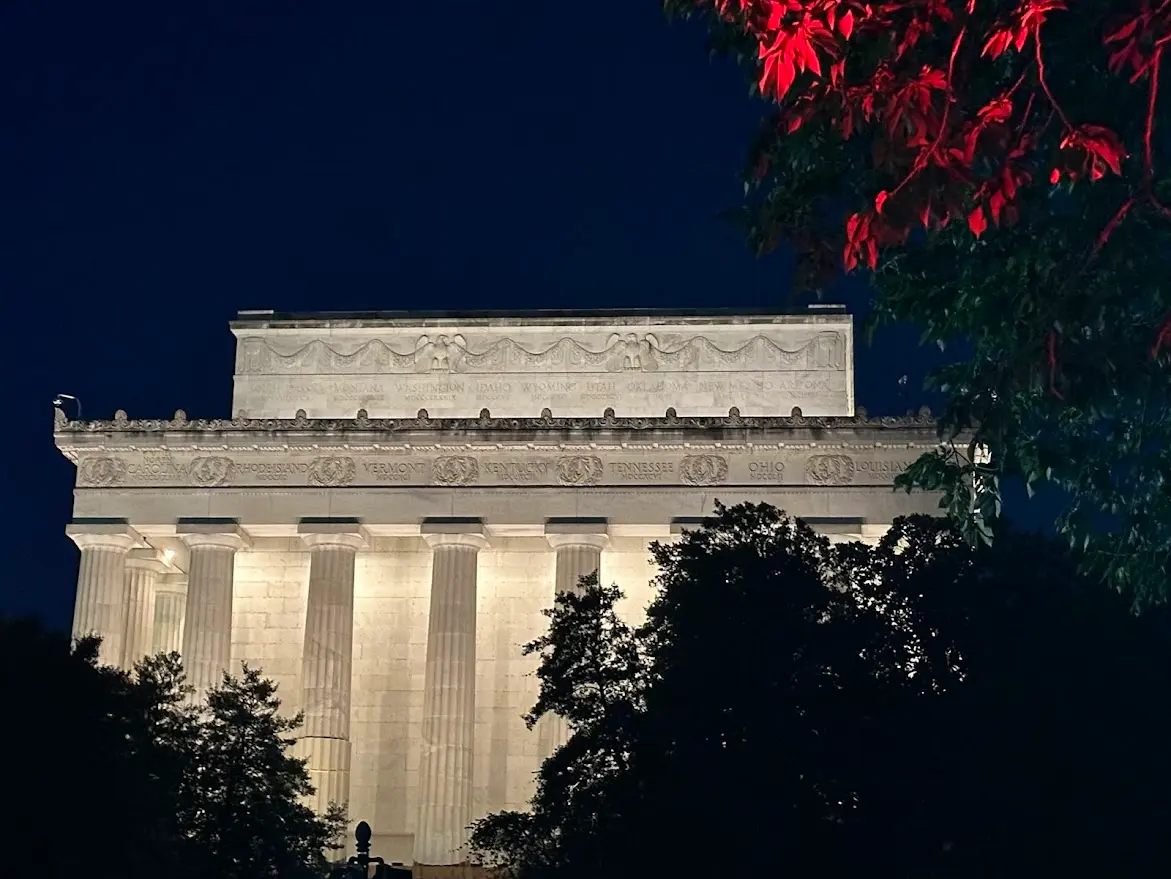
The Lincoln Memorial is a national memorial dedicated to Abraham Lincoln, the 16th president of the United States, situated on the western end of the National Mall in Washington, D.C. [2] Built in a neoclassical style modeled on a classical Greek temple, it was designed by architect Henry Bacon and dedicated on May 30, 1922. [2] The memorial is administered by the National Park Service as part of its National Mall and Memorial Parks group. [2] It has been listed on the National Register of Historic Places since October 15, 1966, and was ranked seventh on the American Institute of Architects' 2007 list of America's Favorite Architecture. [2]
Activities & Experiences
Visitors can enter the main chamber to view Daniel Chester French's 19-foot marble statue of Lincoln, assembled from 28 pieces of Georgia marble. [1][2] The interior also features murals painted by Jules Guerin, inscriptions of Lincoln's Gettysburg Address and his second inaugural address, and an epitaph written by Royal Cortissoz above the statue. [2] The exterior colonnade of Doric-style columns and the broad plaza steps are freely accessible and are among the most photographed settings in the capital. [1][2] A separate undercroft experience is available beneath the memorial and requires tickets. [1]
Practical Access
The Lincoln Memorial chamber and exterior are free and open to the public 24 hours a day. [1][2] More than seven million people visit annually, making it one of the most visited memorials in the country. [2] Nearby attractions on the National Mall include the Korean War Veterans Memorial, the Vietnam Veterans Memorial, and the Cherry Blossom Festival. [1]
Restrictions
Tickets are required to access the Lincoln Memorial undercroft; the main chamber and exterior do not require tickets or reservations. [1]
What Makes It Distinctive
The Lincoln Memorial has served as a symbolic gathering point for civil rights history, most notably as the site of Martin Luther King Jr.'s "I Have a Dream" speech delivered on August 28, 1963, during the March on Washington for Jobs and Freedom. [2] Its round-the-clock public access and prominent position on the Mall's central axis, aligned with the Washington Monument and the Capitol, give it a civic presence unlike most other memorials. [2] The combination of monumental neoclassical architecture, primary-source inscriptions of Lincoln's own words, and its documented role in American political history makes it a singular destination among Washington's many memorials. [2]
Sources
- Open year-round
- Hours: 24/7
Access & fees
- chamber: free
Events & seasons
- cherry blossom festival
Features
- 19-ft marble statue
- doric neoclassical temple
- interior murals
- lincoln speeches inscribed
Nearby
- korean war veterans memorial
- vietnam veterans memorial
- world war ii memorial
Good to know
- 7m+ annual visitors
- nps administered site
- open 24 hours