Lands End
About
What It Is
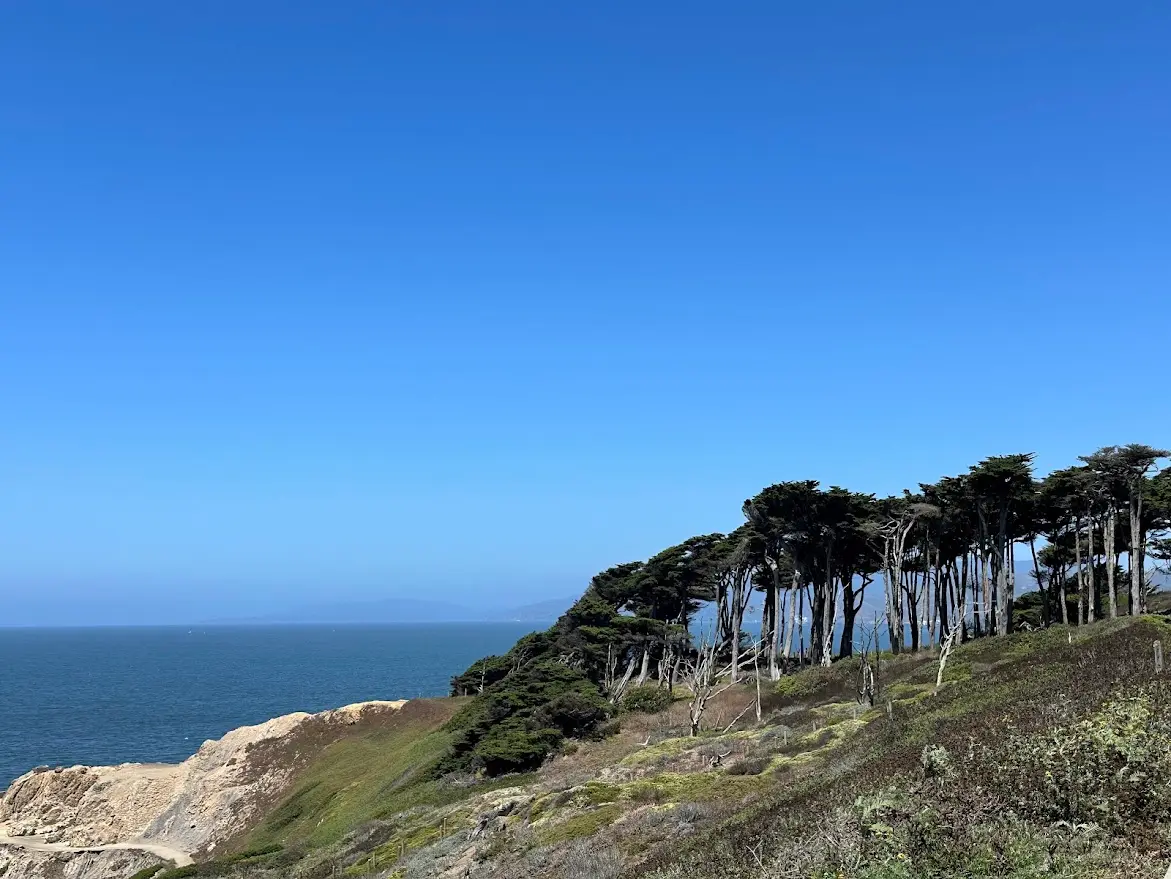
Lands End is a park unit within the Golden Gate National Recreation Area (GGNRA), located on the northwest edge of San Francisco along the Pacific Ocean shoreline [1]. It occupies a rocky, windswept stretch of coastline at the mouth of the Golden Gate, positioned between the Sutro District and Lincoln Park, and borders the Fort Miley Military Reservation [1]. The area takes its name from a specific promontory within the park and carries a layered history stretching from Yelamu Ohlone settlement through the Gold Rush era and into the late 19th century, when millionaire Adolph Sutro built a steam railway connecting downtown San Francisco to the site for a 5-cent fare [1].
Activities & Experiences
The primary draw is the Coastal Trail, which follows the former railbed of the Cliff House Railway along the cliffs and connects the Sea Cliff neighborhood to Point Lobos Avenue near the Cliff House [1]. From the trail and from Mile Rock, visitors can observe historic shipwrecks at low tide, and a spur trail leads to Mile Rock Point and Mile Rock Beach, both offering views of the Golden Gate [1]. The park also contains the ruins of the Sutro Baths, a scenic overlook at Point Lobos, and a memorial to the USS San Francisco at the southern end of the Coastal Trail [1]. The San Francisco Crosstown Trail terminates at Lands End, making it a notable endpoint for long-distance urban hikers [1].
Practical Access
The Coastal Trail is accessible to people with disabilities as far as the Mile Rock Overlook, and to cyclists as far as the Eagles Point steps [1]. A visitor center called Lands End Lookout opened on April 28, 2012, and serves as an orientation point for the park [1]. The Coastal Trail runs from the northern end of 32nd Avenue in the Sea Cliff neighborhood westward and south to Point Lobos Avenue [1].
Restrictions
No specific restrictions noted in the sources.
What Makes It Distinctive
Lands End combines natural coastal scenery with an unusually dense concentration of historic layers: Ohlone heritage, Gold Rush-era resort development, 19th-century rail infrastructure, visible shipwrecks, and the ruins of the Sutro Baths all occupy the same compact shoreline [1]. The Coastal Trail's dual role as both a section of the California Coastal Trail and a former railway corridor gives it a character distinct from purpose-built recreational paths [1]. Its position at the mouth of the Golden Gate means views from the trail and its overlooks take in one of the most recognized maritime passages in the world [1].
Sources
- Best months: March–June