Lake Louise
About
What It Is
Lake Louise is a glacial lake within Banff National Park in Alberta, Canada, situated approximately 5 km west of the community of Lake Louise and the Trans-Canada Highway [1]. The Stoney Nakoda First Nations people, who knew the lake long before European contact, called it Ho-run-num-nay, meaning Lake of the Little Fishes [1]. The lake takes its current name from Princess Louise Caroline Alberta, the fourth daughter of Queen Victoria and wife of the Governor General of Canada from 1878 to 1883 [1]. Its surface covers 0.8 km2, and it drains through Louise Creek into the Bow River [1].
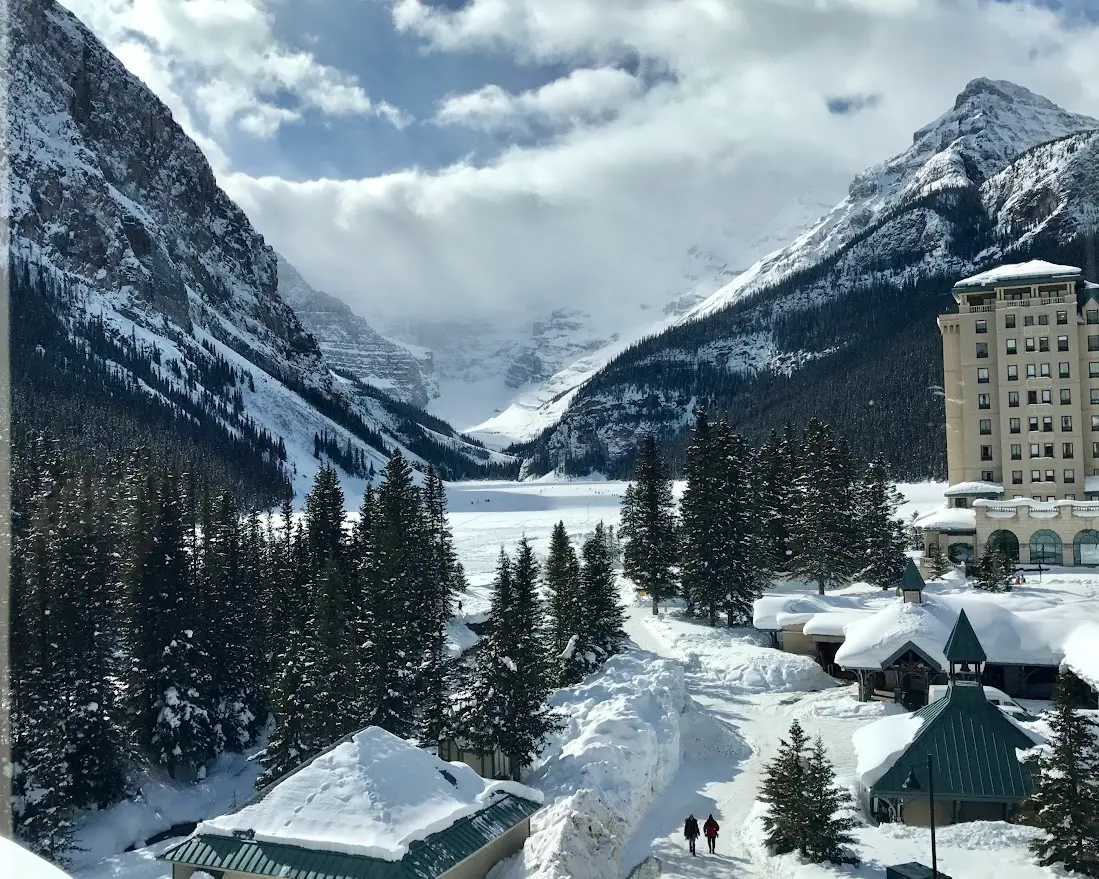
The lake's distinctive turquoise colour results from rock flour suspended in glacial meltwater flowing into the basin from the glaciers above [1]. Fairmont's Chateau Lake Louise, a luxury railway hotel built in the early twentieth century by the Canadian Pacific Railway, stands on the eastern shore [1].
Activities & Experiences
Visitors can explore an extensive network of hiking trails leading to destinations such as Saddleback Pass, Fairview Mountain at 2,744 m, Lake Agnes, Big Beehive, Little Beehive, Devils Thumb, Mount Whyte, and Mount Niblock [1]. Some trails also permit mountain biking and horseback riding, and the surrounding mountain faces are used for rock climbing [1]. Moraine Lake and Lake Agnes are both accessible from Lake Louise [1].
In summer, kayaking and canoeing are popular on the lake, supported by a boat launch and rental facility on the northeastern shore [1]. Winter brings a different range of pursuits, including ice skating and ice fishing on the lake itself, plus snowshoeing, snowmobiling, dog sledding, and ice climbing in the surrounding area [1]. The nearby Lake Louise Ski Resort offers alpine and cross-country skiing, snowboarding, and heli-skiing [1].
Practical Access
Lake Louise lies 11 km east of the British Columbia border and is reached via the community of Lake Louise off the Trans-Canada Highway [1]. The sources do not specify current parking fees, reservation requirements, hours of operation, or typical visit duration.
Seasonality shapes the experience significantly: summer favours hiking and paddling, while winter centres on snow and ice activities [1]. Visitors should verify current Banff National Park entry requirements and fees directly with Parks Canada, as those details are not provided in the available sources.
Restrictions
No specific restrictions noted in the sources.
What Makes It Distinctive
Lake Louise holds a layered significance that few Canadian lakes match: it was a place of importance to the Stoney Nakoda people for generations before Thomas Edmonds Wilson became the first non-Indigenous visitor in 1882, guided there by Edwin Hunter [1]. The lake's vivid turquoise colour, produced by glacial rock flour rather than algae or dye, is a visually striking and scientifically grounded phenomenon [1].
The combination of a grand historic railway hotel on the shoreline, year-round outdoor activities ranging from high-alpine hiking to heli-skiing, and direct access to additional destinations such as Moraine Lake and Lake Agnes makes Lake Louise an unusually versatile destination within Banff National Park [1].
Sources
Inside
- Season: December–February
Things to do
- dog sledding
- heli-skiing
- hiking
- horseback riding
- ice climbing
- ice fishing
- ice skating
- kayaking & canoeing
- mountain biking
- rock climbing
- skate when the sun goes down
- snowmobiling
- snowshoeing
Amenities
- boat launch & rentals
- luxury hotel on-site
Best time to visit
- summer for water activities
- winter for snow & ice activities
Features
- glacial lake, 0.8 km²
- turquoise glacial water
Nearby
- lake agnes
- lake louise ski resort
- moraine lake
Good to know
- located in banff national park