Golden Gate Bridge
About
What It Is
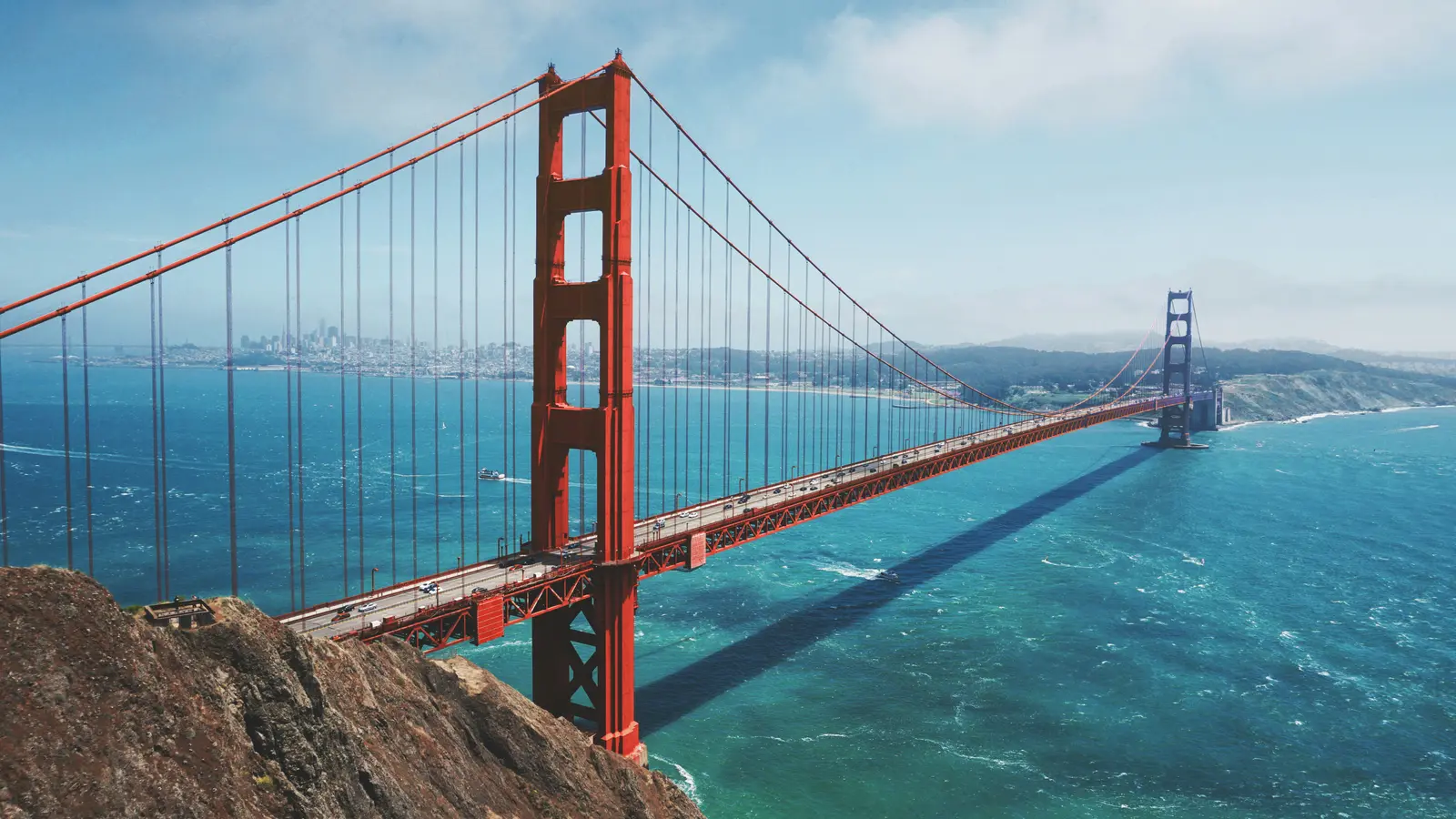
The Golden Gate Bridge is a suspension bridge crossing the Golden Gate strait, the roughly one-mile-wide channel that connects San Francisco Bay to the Pacific Ocean [1]. It links the northern tip of the San Francisco Peninsula to Marin County, carrying U.S. Route 101, California State Route 1, and U.S. Bicycle Route 95 [1]. The bridge opened on May 27, 1937, after construction began on January 5, 1933, and was completed at a cost of approximately 35 million dollars [1][2]. The American Society of Civil Engineers recognizes it as one of the Wonders of the Modern World [1].
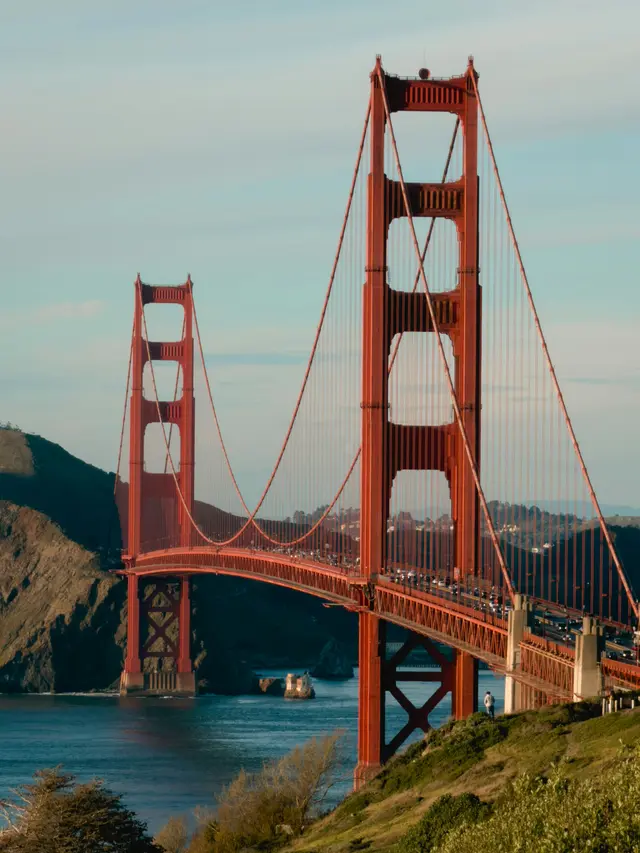
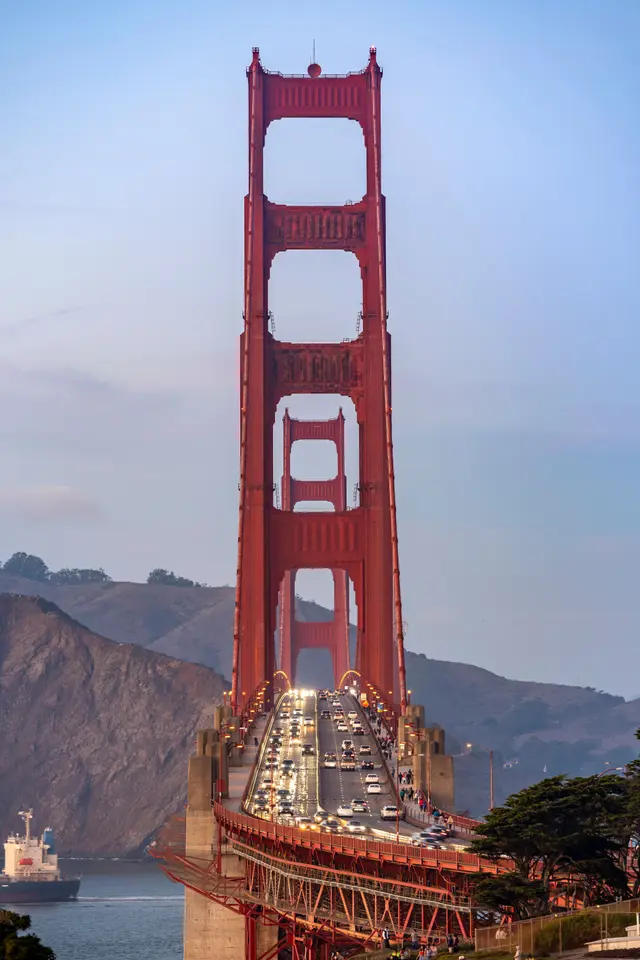
At the time of its opening, the bridge held records as both the longest and tallest suspension bridge on earth, with a main span of 4,200 feet and a total height of 746 feet [1]. Its signature color, International Orange, was selected by architectural designer Irving Morrow to stand out against the surrounding landscape and frequent fog [2].
Activities & Experiences
Visitors can cross the bridge on foot or by bicycle, taking in views of San Francisco Bay, the Pacific Ocean, and the surrounding headlands [1]. The bridge carries pedestrian and bicycle traffic as part of its regular operation, and cycling it forms part of U.S. Bicycle Route 95 [1].
The Presidio, the historic military post on the San Francisco side of the bridge, provides additional historical and natural context for a visit, including the area around Crissy Field where a groundbreaking ceremony drew at least 100,000 people in 1933 [2].
Practical Access
The bridge carries vehicle traffic on U.S. Route 101 and California State Route 1, and also accommodates pedestrians and cyclists [1]. No specific hours, fees, reservation requirements, or typical visit durations are stated in the sources.
Restrictions
No specific restrictions noted in the sources.
What Makes It Distinctive
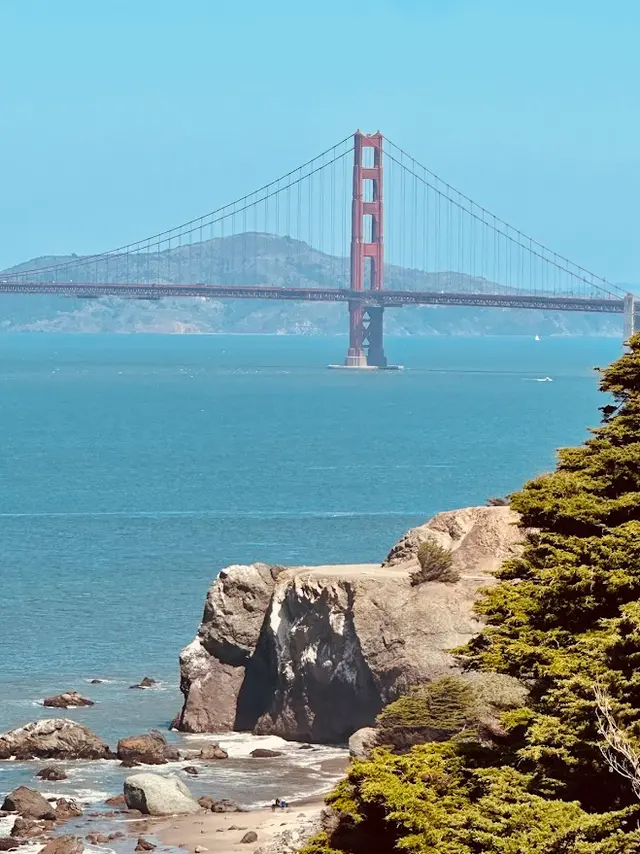
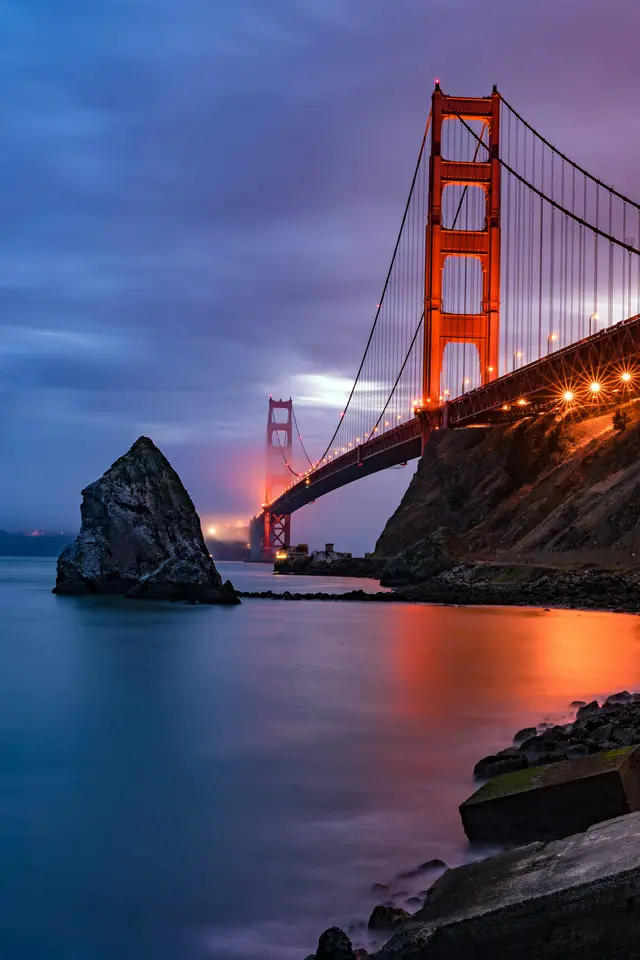
The Golden Gate Bridge is described by Frommer's travel guide as possibly the most beautiful and certainly the most photographed bridge in the world [1]. Its combination of engineering scale, a deliberately chosen color designed to contrast with fog and landscape, and its position at the mouth of San Francisco Bay give it a visual identity unlike any comparable structure [1][2].
The bridge was conceived and built despite expert opinion that strong tides, currents, depths of up to 372 feet at the channel center, and persistent high winds made such a crossing impossible [1]. That history of overcoming perceived impossibility, alongside its continued status as a primary symbol of both San Francisco and California, distinguishes it from other major suspension bridges [1].
Sources
- Open year-round
- Typical duration: 1h
Access & fees
- vehicle toll applies
Things to do
- cycling across bridge
- pedestrian crossing
- walking across bridge
Events & seasons
- anniversary celebrations
- groundbreaking ceremony February 26 1933
- groundbreaking ceremony January 5 1933
Features
- construction cost $35 million
- crosses golden gate strait
- international orange color
- Irving Morrow selected color
- longest suspension bridge 1937–1964
- painted international orange to improve visibility in heavy fog and complement its natural surroundings.
- suspension bridge
- tallest suspension bridge 1937–1998
- wonder of modern world
Nearby
- crissy field
- marin county (north)
- presidio of san francisco
- san francisco bay
- the presidio
Good to know
- carries U.S. Bicycle Route 95
- carries us-101 and ca-1
- completed April 19 1937
- construction began January 5 1933
- construction cost 35m usd
- frequent fog and wind
- frequently cloudy or foggy because cold ocean currents meet warm inland air, creating a natural funnel through the golden gate strait
- links San Francisco Peninsula to Marin County
- opened may 27, 1937
- the name "golden gate" comes from the golden gate strait
Photos