Dungeness Spit
About
What It Is
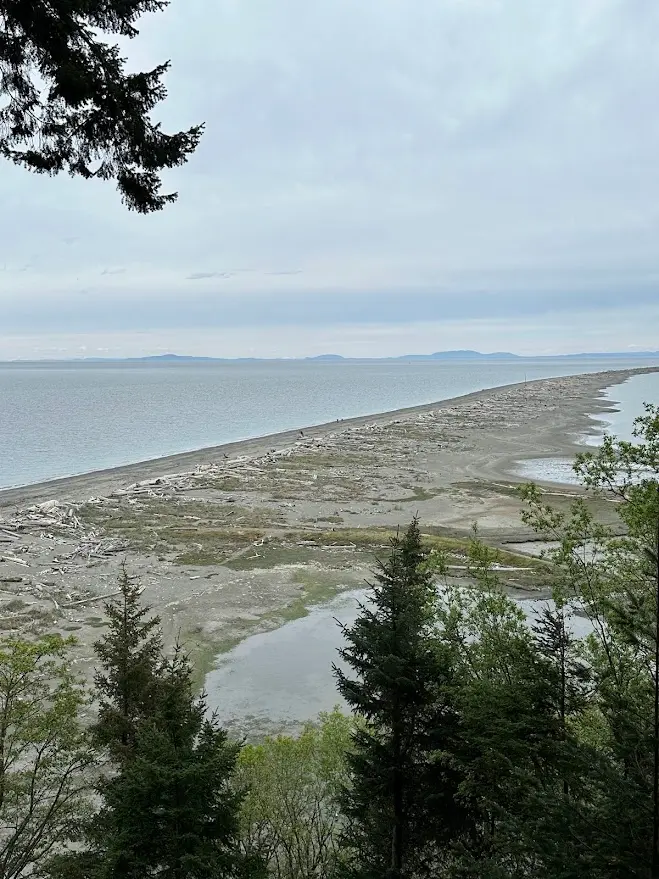
Dungeness Spit is a natural sand spit extending roughly 5 miles (8 km) into the Strait of Juan de Fuca from the northern edge of the Olympic Peninsula in northeastern Clallam County, Washington [1]. It holds the distinction of being the longest natural sand spit in the United States, and it continues to grow at approximately 15 feet per year [1]. The spit falls entirely within the Dungeness National Wildlife Refuge and encloses a body of water known as Dungeness Bay [1]. British explorer George Vancouver named it in 1792 after the Dungeness headland in England, noting its strong resemblance to that landform [1].
Activities & Experiences
Visitors can walk the length of the spit, which leads to the New Dungeness Lighthouse at its tip [1]. The adjacent Dungeness Recreation Area offers a 1-mile scenic bluff trail, several miles of hiking and biking trails, and a designated equestrian trail [1]. The lighthouse itself has been staffed and maintained by volunteers of the New Dungeness Light Station Association since 1994 [1].
Practical Access
The spit and the Dungeness Recreation Area are open to the public year-round [1]. A campground is available on site and also operates year-round [1]. No information on fees, hours, reservations, or typical visit duration is provided in the available sources.
Restrictions
No specific restrictions noted in the sources.
What Makes It Distinctive
Dungeness Spit is the longest natural sand spit in the United States, a geologic distinction that sets it apart from other coastal formations in the Pacific Northwest [1]. Its active growth rate of about 15 feet per year makes it a measurably dynamic landform [1]. The presence of a volunteer-maintained 19th-century lighthouse at the spit's end adds a historical and cultural layer uncommon among beach and wildlife refuge destinations [1].
Sources
- Best months: May–September