Central Park
About
What It Is
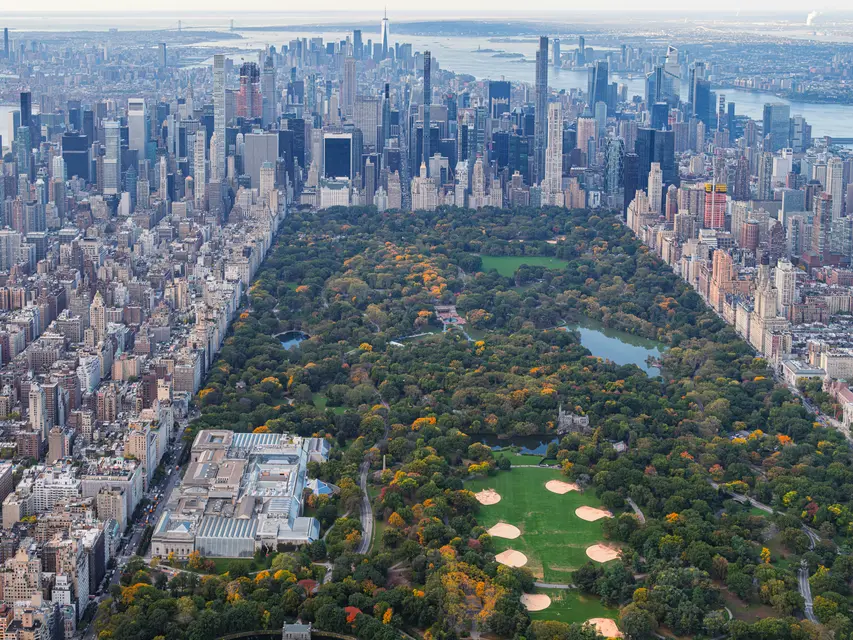
Central Park is an 843-acre urban park occupying a rectangular strip of Manhattan between 59th Street to the south and 110th Street to the north, bounded by Fifth Avenue on the east and Central Park West on the west. [2] It holds the distinction of being the first landscaped park in the United States, designed in 1858 by landscape architects Frederick Law Olmsted and Calvert Vaux following a competition won with their Greensward Plan. [2] The park is owned by the New York City Department of Parks and Recreation and has been managed by the Central Park Conservancy, a private non-profit, under a public-private contract since 1998. [2] It draws an estimated 42 million visits annually, making it the most visited urban park in the United States, and has been designated both a National Historic Landmark district and a New York City scenic landmark. [2]
Activities & Experiences
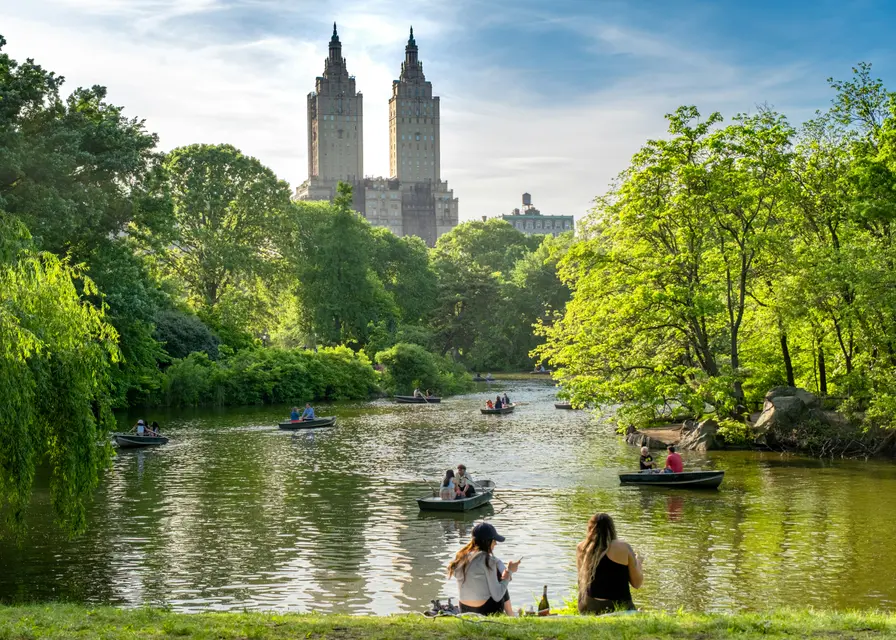
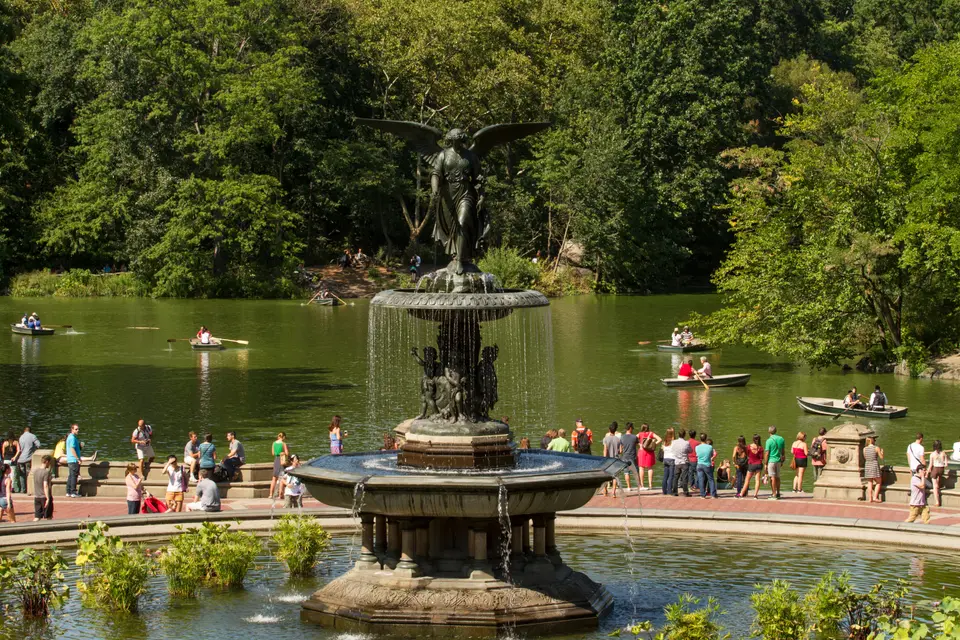
Visitors can walk, jog, or cycle the 6.1 miles of park drives, which include dedicated lanes for each activity. [2][3] The park contains nearly 50 fountains, monuments, and sculptures, 36 bridges and arches, and eight artificially created lakes and ponds. [1][2] Major attractions include the Ramble and Lake, Jacqueline Kennedy Onassis Reservoir, Sheep Meadow, Wollman Rink, the Central Park Zoo, Bethesda Terrace, and the Delacorte Theater, where Shakespeare in the Park performances are held. [2] Recreational facilities support skating, rowing, tennis, basketball, baseball, handball, soccer, volleyball, fishing, horseback riding, and climbing, and the park's 21 playgrounds serve younger visitors. [1][2] The Metropolitan Opera and New York Philharmonic both stage performances on the Great Lawn, and the Central Park Conservancy offers guided walking tours year-round at 25 USD per adult. [1][3]
Practical Access
The park is accessible by multiple subway lines: the A, B, C, D, and 1 trains stop at Columbus Circle on the southwest corner, while B and C trains continue along Central Park West with stops at 72nd, 81st, 86th, 96th, 103rd, and 110th Streets. [3] On the Upper East Side, the 4, 5, and 6 lines along Lexington Avenue require a three-block walk west to reach the park, and the N, R, and W lines stop at Fifth Avenue and 60th Street near the southern entrance. [3] Several crosstown bus routes also traverse the park via transverse roads. [3] No general admission fee is charged to enter the park. [1] Visitor centers are located at Belvedere Castle, the Charles A. Dana Discovery Center, the Dairy, the Chess and Checkers House, and Columbus Circle. [2]
Restrictions
Dogs must be kept on leash throughout the park. [1] Cycling is prohibited on pedestrian pathways; cyclists are restricted to the paved park drives and dedicated cycling lanes. [3] Bicycle rentals within the park are permitted only through authorized vendors, identifiable by their fixed locations, credit card machines, and helmet provision; unauthorized vendors operate off park property or from bikes chained to street furniture outside the park. [3] Fishing at Harlem Meer is catch-and-release only. [1] CitiBike rentals must be returned to a docking station within 30 minutes to avoid additional charges. [3]
What Makes It Distinctive
Central Park is the first landscaped park ever built in the United States and remains the country's most visited urban park, receiving roughly 42 million visits per year as of 2016. [2] Its entire landscape, including all eight lakes and ponds, was artificially constructed in the 1850s and 1860s, making it a feat of deliberate design rather than preserved nature. [2] The park has been on UNESCO's tentative World Heritage list since April 2017 for its landscape and design, and it is recognized as one of the most filmed locations in the world, a status that has shaped its global recognition. [2][3] The combination of world-class performing arts events, extensive recreational infrastructure, and a biologically diverse ecosystem supporting several hundred species of flora and fauna within a dense urban environment sets it apart from comparable city parks. [2]
Sources
- Open year-round
- Typical duration: 6h
Access & fees
- free entry
Things to do
- attend concerts and performances
- birdwatching
- cycling on park drives
- explore belvedere castle
- guided walking tours
- horse-drawn carriage rides
- ice skating
- jogging, walking, hiking
- photography
- picnicking
- relax in sheep meadow
- rowing and boat rentals
- stroll across bow bridge
- visit bethesda terrace and bethesda fountain
- visit strawberry fields (john lennon memorial)
- visit the central park zoo
- walk or jog scenic trails
Amenities
- bike rentals available
- eateries on-site
- public restrooms
- wi-fi hot spots
Best time to visit
- summer weekends peak
Events & seasons
- central park summerstage
- harlem meer performance festival
- metropolitan opera on great lawn
- ny philharmonic on great lawn
- shakespeare in the park
Features
- ~50 fountains, monuments, sculptures
- 21 children's playgrounds
- 36 bridges and arches
- 5 visitor centers
- 8 artificial lakes and ponds
- 843 acres, landscaped
- national historic landmark
- unesco tentative list
- visit strawberry fields (john lennon memorial)
Nearby
- broadway malls
- theodore roosevelt park
Good to know
- crosstown bus routes
- general info phone
- managed by central park conservancy
- multiple subway lines
Photos