Catalina Island
About
What It Is
Catalina Island, known locally as Isla Catalina, is a small uninhabited tropical island covering approximately 9.6 square kilometres off the southeastern coast of the Dominican Republic, roughly 2.4 kilometres from the mainland near the provinces of La Altagracia and La Romana. [1] It holds formal protected status as a Natural Monument under the Ministerio de Medio Ambiente y Recursos Naturales. [4] The island is composed of uplifted coral limestone and supports a range of ecosystems including sand dunes, mangrove patches, dry coastal scrub, and some of the Dominican Republic's most biodiverse near-shore coral reefs. [1][4] Christopher Columbus documented the island in the 1490s, and it later served as shelter for colonial-era vessels and reportedly as a temporary base for buccaneers. [4]
The island gained additional historical significance in 2007 when researchers from Indiana University identified a shipwreck lying roughly 70 metres offshore at a depth of approximately three metres as the Quedagh Merchant, the 1699 vessel of pirate Captain William Kidd. [1] A Marine Protected Area was subsequently established around the wreck to safeguard both its archaeological remains and the surrounding reef. [1] The site has been nominated as a Living Museum in the Sea under an international program protecting submerged cultural and biological resources. [1]
Activities & Experiences
Diving and snorkelling are the primary draws, with two well-known sites attracting most visitors: the Aquarium, a shallow reef area, and the Wall, a dive site where the reef drops from around 10 metres to over 40 metres on the island's southern side. [2][4][6] The Quedagh Merchant wreck, sitting at only two to three metres of depth, is accessible to snorkellers as well as divers and forms part of the Underwater Museums route of La Romana. [5] Reef species regularly encountered include Nassau grouper, eagle rays, hawksbill sea turtles, and Caribbean reef sharks along the wall. [4]
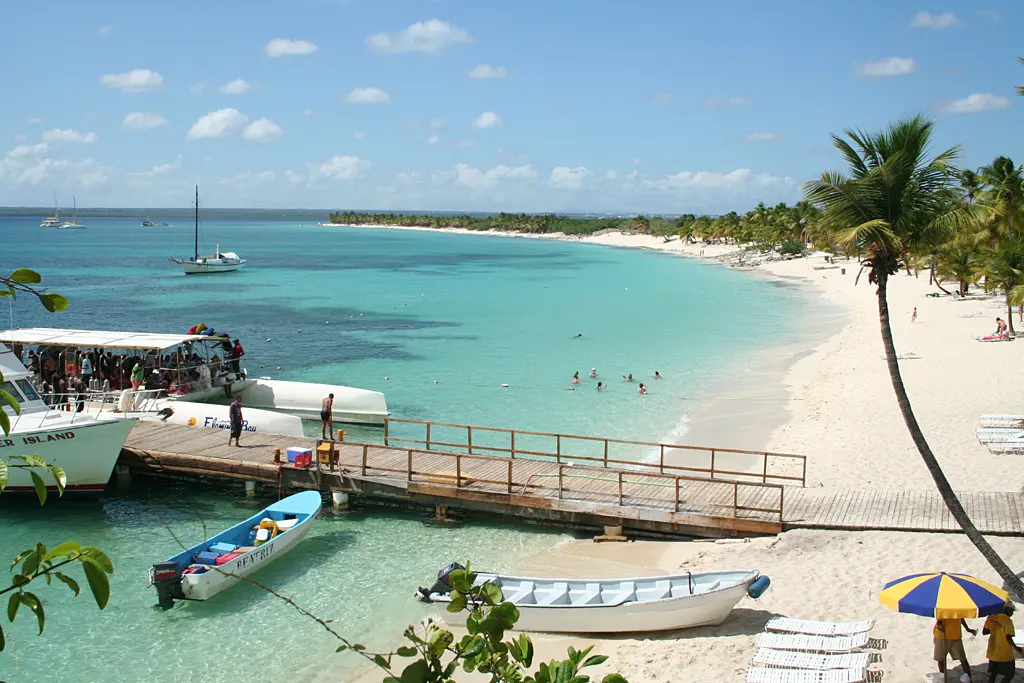
Visitors can also spend time on the island's white-sand beaches, which are open to the public even though portions are used for cruise ship excursions. [2] Fishing for warm-water species such as Guatapan, Jureles, and Scombridae is practiced in the surrounding waters. [5] Buffet lunches with Dominican cuisine and small shops are available on the island, and traditional dances are sometimes performed for visitors. [5]
Practical Access
The island is reached by boat, with tours departing from Bayahibe, Playa Dominicus, and Casa de Campo in the La Romana area. [5][6] One operator runs hotel pickups between 7:00 AM and 8:30 AM, with departure from the port at 9:30 AM and return to hotels between 5:30 PM and 6:30 PM, making for a full-day excursion of approximately eight to nine hours. [6] As of 2026, that operator lists a snorkelling rate of USD 60 per person and a diving rate of USD 120 per person, with equipment, certified guides, buffet lunch, and round-trip hotel transport included. [6]
Costa Cruises operates a private beach on the island for its passengers, who are transported ashore by tender from ships anchored offshore. [1] The island is also an occasional stop for other Caribbean cruise itineraries. [1] No permanent freshwater source exists on the island, and no permanent settlement has ever been established there. [4]
Restrictions
A strict visitor capacity limit is enforced under a co-management agreement signed in January 2026 between conservation partners and Costa Sur, with the explicit goal of preventing overcrowding and reef degradation. [3] Anchoring restrictions apply in sensitive reef zones as part of the Natural Monument management plan. [4] The Marine Protected Area around the Quedagh Merchant wreck was established to protect both the archaeological site and its surrounding reef ecosystem. [1]
What Makes It Distinctive
Catalina Island combines an accessible shallow shipwreck of documented historical significance with wall diving that drops beyond 40 metres, making it one of the few sites in the Caribbean where snorkellers and advanced divers can explore the same destination at very different depths. [1][2][4] The Quedagh Merchant wreck, lying at only two to three metres and identified as a named pirate vessel from 1699, is a rare submerged cultural monument that has been the subject of university research, a National Geographic documentary, and an international museum partnership. [1][5] The island also shelters three endemic reptile species, two species found on only one other island, nesting hawksbill sea turtles, and the endangered Hispaniolan Solenodon, giving it ecological significance well beyond its small size. [3] An active coral restoration programme launched under a January 2026 co-management framework adds a conservation dimension that distinguishes it from purely recreational beach-and-dive destinations in the region. [3]
Sources
- Catalina Island (Dominican Republic)
- Isla Catalina - Dominican Republic Tourism - Official Website
- Catalina Island Restoration, Dominican Republic | IOCC — Island-Ocean Connection Challenge
- Isla Catalina, Dominican Republic: Ratings & Visitor Guide
- Catalina Island, Dominican Republic
- Isla Catalina Tours
- Open year-round
- Typical duration: 8h
Access & fees
- diving per person
- tours ranges from $35 to $60 per person (may or not may includes food and drinks)
Things to do
- beach day
- fishing
- scuba diving
- shallow-water exploration
- shipwreck site visit
- snorkelling
- wildlife observation
Before you go
- hurricane season reef risk
Amenities
- buffet lunch on island
- small shops on island
Best time to visit
- calmer southern waters
Features
- 26 cannons on wreck
- active coral restoration
- anchoring restrictions
- area 9.6 sq km
- coral stone island
- costa cruises private beach
- distance from mainland
- ecosystems: dunes, mangroves, reefs
- endemic reptile species
- hawksbill turtle nesting
- hispaniolan solenodon habitat
- living museum in the sea nominee
- marine protected area
- max elevation 18 m
- named by columbus 1494
- natural monument status
- natural offshore sandbars
- occasional cruise ship stop
- quedagh merchant shipwreck
- visitor capacity limit enforced
- wall dive depth
Nearby
- la altagracia province
- la romana province
Good to know
- departure points
- hotel pickup window
- no freshwater on island
- port departure time
- typical visit duration