Bahia de las Aguilas
About
What It Is
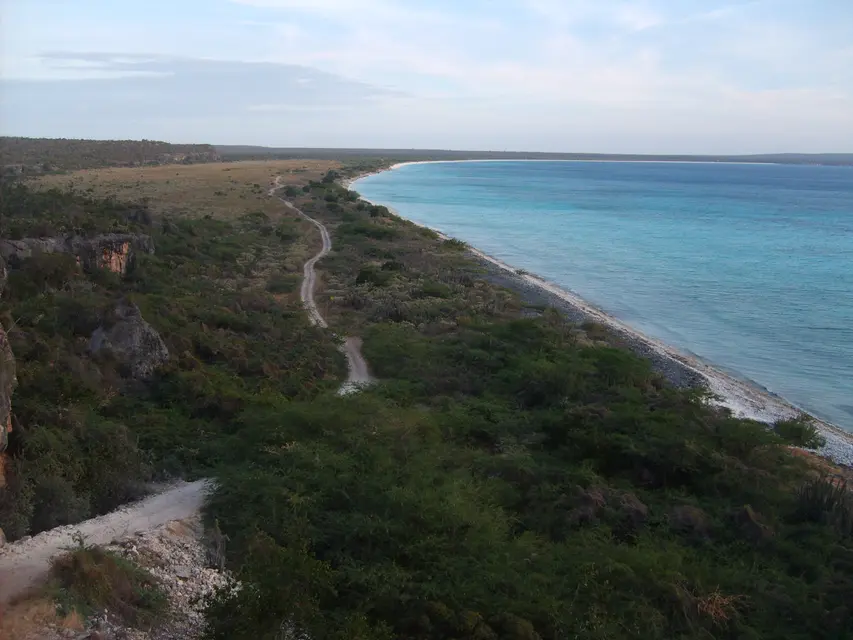
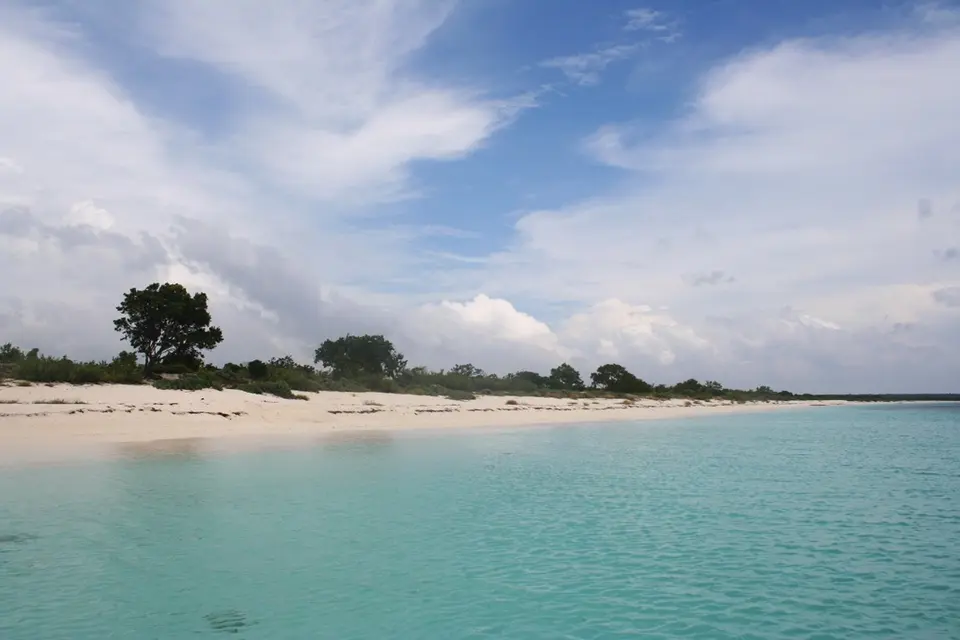
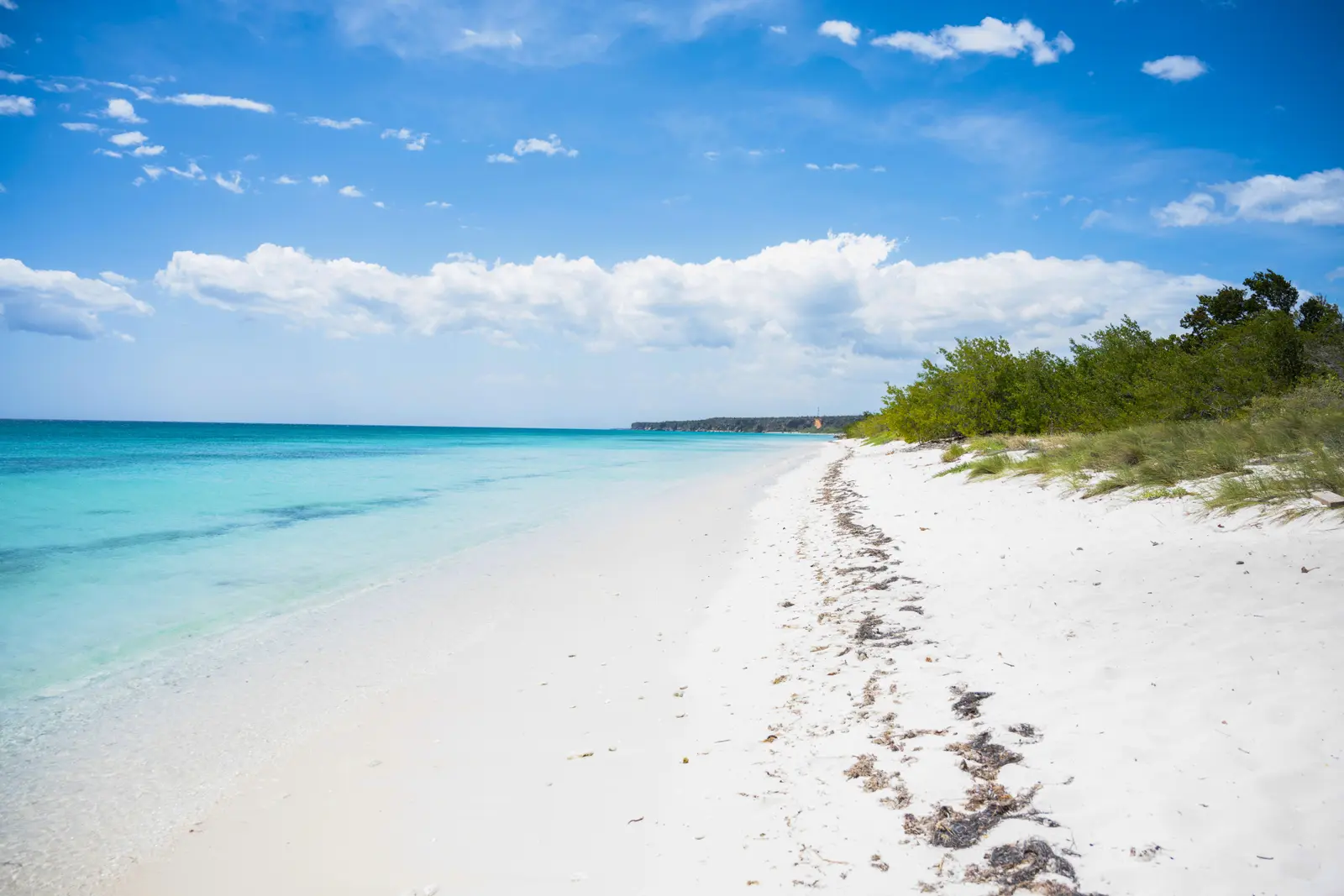
Bahía de las Águilas is an 8-kilometer beach on the southwestern coast of the Dominican Republic, located in the Pedernales Province roughly 20–25 kilometers from the town of Pedernales and approximately 320–323 kilometers from Santo Domingo. [2][3][6] The beach sits entirely within Jaragua National Park, a protected reserve established in 1983 and recognized by UNESCO as part of the Jaragua–Bahoruco–Enriquillo Biosphere Reserve. [3][4][5] It is widely regarded as the most beautiful and most pristine beach in the Dominican Republic, and ranks 34th on the World's 50 Best Beaches list. [1][6] The surrounding terrain is semi-arid and largely devoid of shade, characterized by dry scrubland, karst rock formations, and cactus rather than the palm-lined shores typical of other Dominican beaches. [3][7]
Activities & Experiences
Visitors can swim in calm, crystal-clear water with visibility exceeding 30 meters on calm days, and snorkel along the rocky edges where the bay meets the cliffs, encountering tropical fish, sea turtles, starfish, and spiny lobster. [3][7] The beach itself offers walking and exploration along its full 8-kilometer length, with millions of sea shells scattered along the shore. [3] Wildlife observation is a draw throughout the park: rhinoceros iguanas and several cactus species are commonly spotted on the overland route, and from June to December visitors may witness hawksbill sea turtle hatchlings making their way to the sea. [3][5] Birdwatching opportunities include pelicans, sooty terns, and plain and white-crowned pigeons within the park. [2][4] Nearby at Cabo Rojo, diving is possible among coral reefs inhabited by starfish, octopuses, seahorses, and blowfish, with occasional manatee sightings. [5]
Practical Access
The beach is reached either by motorboat from the small settlement of La Cueva at Cabo Rojo — a 10–15 minute ride — or by high-clearance 4WD vehicle along an unpaved track through the national park; the overland route should only be attempted in dry conditions with a local guide. [3][7] There is no public transport to La Cueva; visitors without their own vehicle must negotiate with a motoconcho from Pedernales, with a reported 2026 price of 2,500 pesos for a round trip including waiting time. [3] Boat transport from Rancho Típico Cueva de las Águilas is listed at USD 85 round-trip for up to five people, plus USD 15 per additional passenger; independent boat operators at La Cueva charge approximately RD 3,500–5,500 per boat for one to five passengers, with each additional passenger adding RD 500. [3][7] The national park entrance fee is approximately RD 150 per person. [3][7] From Santo Domingo the drive to Pedernales takes 5–6 hours via Barahona; from Barahona it is roughly 2–3 hours. [6][7] There are no facilities, lifeguards, restaurants, or stores at the beach itself; all food, drinking water, shade, snorkeling gear, and supplies must be brought in. [3][7] A small restaurant near the park entrance at Cabo Rojo serves meals for under USD 10 per person, including fresh-grilled red snapper and lobster. [3] Overnight accommodation is not available within the park, but camping options and wooden suites exist at Cabo Rojo at Rancho Típico Cueva de las Águilas and Echo Del Mar by Mint. [5] The best months to visit are November through April, when conditions are driest, waves are calmest, and sargassum risk is lowest. [7]
Restrictions
Fishing is illegal within Jaragua National Park. [3] No hotels, shops, or restaurants are permitted on the beach due to its protected status, and President Luis Abinader has stated that no construction of any kind will take place in environmentally protected zones. [1][2] Signs at the beach prohibit camping, though tents may be rented or brought by visitors. [3] Littering is prohibited within the protected national park. [7] Snorkeling gear is not available for rent or purchase at the beach; visitors must bring their own. [3]
What Makes It Distinctive
Bahía de las Águilas is one of the very few Caribbean beaches of its scale — 8 kilometers — that remains entirely free of hotels, restaurants, and commercial infrastructure, a condition enforced by its status as protected national park land. [1][2][6] Its marine ecosystem includes uncontaminated coral reefs, seagrass prairies, and populations of endangered species including hawksbill, leatherback, and green sea turtles, as well as Antillean manatees and the endemic Hispaniolan solenodon found nowhere else on earth. [2][5] The combination of extreme isolation, exceptional water clarity exceeding 30 meters, and a surrounding arid karst landscape unlike any other Dominican beach setting makes it a singular destination in the Caribbean. [6][7]
Sources
- Bahía de Las Águilas - Dominican Republic Tourism - Official Website
- Bahía de las Águilas
- Bahía de las Águilas: a hidden treasure on the south coast
- Explore Bahía de Las Águilas · Visit Dominican Republic
- Bahia de las Aguilas Guide 2026 | How to Visit, Costs & Tips
- Bahía de las Águilas — DR's Most Beautiful Beach | Dominican Republic 365
- Open year-round
- Typical duration: 1 day
Access & fees
- boat hire per boat (1–5 passengers)
- boat per additional passenger
- boat transfer round-trip (up to 5 people)
- park entry fee
- sixth passenger surcharge
Things to do
- beach walking and exploration
- birdwatching
- sea turtle nesting observation
- snorkeling
- swimming
- wildlife watching
Before you go
- bring cash for boat and park fee; no services on beach
- bring drinking water
- bring own snorkel gear
- hire motoconcho from pedernales if no vehicle
- major development underway nearby
- no shade; strong sun protection needed
- solo travelers can join boat groups
Amenities
- restaurant at cabo rojo
Best time to visit
- november–april
Features
- 8 km beach
- coral reef marine ecosystem
- endangered endemic wildlife
- endangered species habitat
- inside national park
- no hotels or construction on beach
- no hotels, shops, or restaurants on beach
- semi-arid landscape
- unesco natural reserve
- water visibility 30+ m on calm days
Nearby
- cabo rojo restaurant and camping
- caves at la cueva village
- laguna de oviedo
Good to know
- 25 km from pedernales
- 323 km from santo domingo
- boat ride duration
- day trip from barahona feasible
- distance from barahona
- free unpaved parking at cabo rojo
- no lifeguards or emergency services
- no overnight facilities in park
- no public transport to site
- no shade on beach
- overland access requires high-clearance 4wd
- overnight base recommended: barahona
- road access requires high clearance
- tent rental available on-site
Photos