Archive of the Indies
About
What It Is
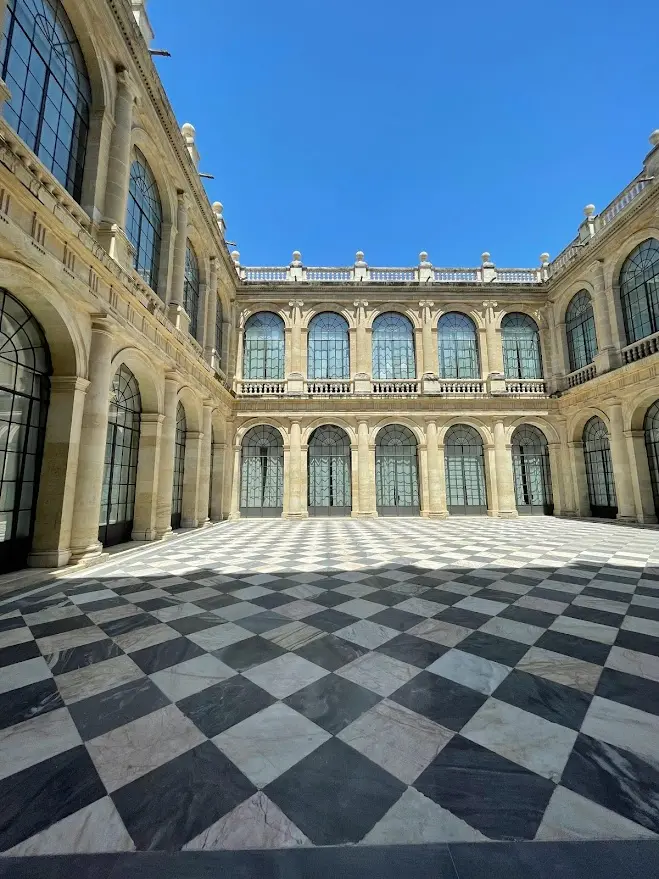
The Archive of the Indies, known in Spanish as the Archivo General de Indias, is a state archive located in Seville, Andalusia, Spain, housed in a late-16th-century building originally constructed to serve as the merchant guild hall of Seville [2]. The institution was established by royal decree of Charles III and opened in 1785, with the purpose of centralizing all documentary records relating to the Spanish Empire in the Americas and Asia under one roof [2]. The building itself was designed by Juan de Herrera, the architect behind the Escorial, and stands as a notable example of Spanish Renaissance architecture with Italianate influences [2]. In 1987, UNESCO inscribed both the building and its holdings as a World Heritage Site, alongside the adjacent Seville Cathedral and the Alcazar of Seville [2].
Activities & Experiences
Visitors can explore the archive's permanent and rotating exhibitions, which draw on the institution's vast documentary holdings to illuminate the history of Spanish expansion and colonial administration [1]. A recurring program called Documento del Mes highlights a single document from the collection each month, offering the public a focused look at specific historical records [1]. The archive also hosts lecture series, concerts, and cultural events throughout the year, including activities tied to international archive awareness initiatives [1]. Researchers with appropriate authorization may consult original documents in the reading room, and the archive provides advisory and certification services for those requiring formal access [1].
Practical Access
The archive operates public visiting hours and offers prior appointment booking for reading room access [1]. Researchers wishing to consult documents in the Sala de Consulta must arrange access in advance through the archive's appointment system [1]. The building is situated in central Seville, adjacent to the Cathedral and the Alcazar, making it reachable on foot from most of the historic city center [2]. The archive also provides a self-copying service and handles requests for authenticated document copies [1].
Restrictions
Access to original documents in the reading room is subject to restrictions, and the archive has issued an advisory notice regarding limitations on consulting originals in the Sala de Consulta [1]. Use of the archive's images for public purposes is governed by specific authorization rules [1]. Filming and use of spaces within the building require prior authorization from the institution [1].
What Makes It Distinctive
The Archive of the Indies holds approximately nine kilometers of shelving containing around 43,000 volumes and some 80 million pages, spanning records from the first conquistadors through the end of the 19th century [2]. Among its holdings are Miguel de Cervantes' application for an official post, the papal Bull of Demarcation Inter caetera, and the journal of Christopher Columbus, alongside maps, city plans, and the routine administrative records of a vast colonial bureaucracy [2]. The archive was created specifically to consolidate materials that had previously been scattered across multiple repositories, including Simancas and Cadiz, making it the single most comprehensive source for the documentary history of the Spanish overseas empire [2]. Its dual status as a functioning research archive and a UNESCO World Heritage monument, set within one of Spain's finest Renaissance buildings, distinguishes it from conventional museums or libraries [2].
Sources
- Portada del Archivo General de Indias - Archivo General de Indias | Ministerio de Cultura
- General Archive of the Indies
- Best months: March–June
- Typical duration: 2h
Things to do
- admire the architecture
- explore renaissance courtyard
- join guided tours (when available)
- learn about the age of discovery and the spanish empire
- research historical records (by appointment for researchers)
- see maps, manuscripts, and letters from famous explorers
- view archival documents
- view rotating exhibitions of original historical documents
Features
- ~80 million pages held
- columbus journal on site
- founded 1785 by charles iii
- spanish renaissance architecture
- unesco world heritage site
Nearby
- alcázar of seville
- seville cathedral
Good to know
- former merchant exchange building